
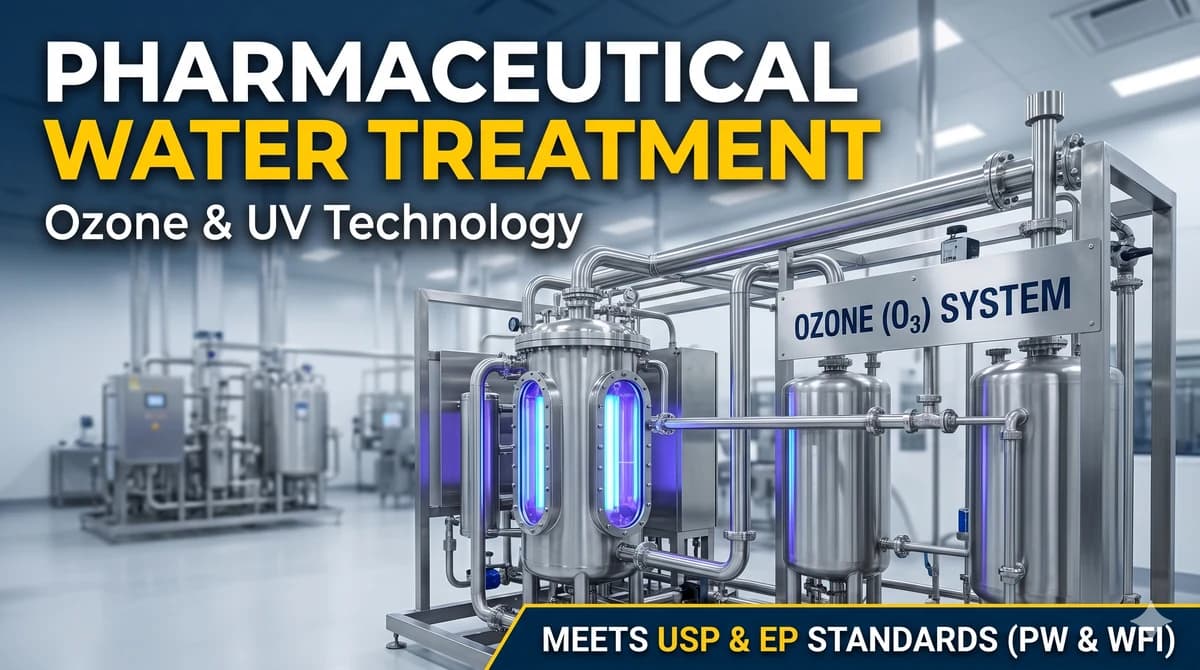
Ozone Generator in Pharmaceutical Water Treatment
USP <1231> and WHO GMP compliant ozone and UV systems for purified water, WFI, and CIP loops
THE NEED
Why Pharma Water?
USP <1231>
mandates bioburden control in purified water
500 ppb
TOC limit for USP Purified Water
6-log
bioburden reduction with ozone+UV
WHO GMP
Schedule M requires validated water systems
20 EU/mL
endotoxin limit — ozone loop keeps it at <1
24×7
continuous biofilm control vs batch sanitisation
OVERVIEW
What is Pharma Water?
Ozone for pharmaceutical water treatment is no longer an emerging technology — it is the preferred sanitisation strategy for Purified Water (PW) and Water for Injection (WFI) distribution loops worldwide, endorsed by the United States Pharmacopoeia (USP <1231>), WHO GMP Guidelines (TRS 970, Annex 2), and CDSCO Schedule M. India's pharmaceutical industry — with over 3,000 formulation plants and 500 API manufacturers concentrated in Baddi (Himachal Pradesh), Hyderabad's Genome Valley, and Ankleshwar (Gujarat) — faces accelerating regulatory pressure to demonstrate robust microbial control in water systems. USFDA 483 observations related to water system biofilm contamination are among the most cited manufacturing deficiencies in Indian pharma plants, making investment in ozone for pharmaceutical water treatment a direct compliance and business continuity necessity.
Purified Water and WFI are the most widely used excipients in pharmaceutical manufacturing. USP defines PW as water meeting conductivity (<1.3 µS/cm at 25°C), TOC (<500 ppb), nitrates, heavy metals, and Total Aerobic Microbial Count (TAMC) criteria (<100 CFU/mL). WFI imposes stricter bacterial endotoxin limits (<0.25 EU/mL by LAL test) and TAMC <10 CFU/100mL. These standards are not achievable by RO/DI production alone — the distribution loop, where water circulates at 5–15 m/s through 316L stainless steel pipes for 24 hours a day, becomes a site of biofilm colonisation within days of start-up if not continuously sanitised. Ozone for pharmaceutical water treatment provides continuous, residual-free loop sanitisation without the daily operational burden of hot water or periodic chemical sanitisation cycles.
Biofilm in pharmaceutical water loops is the central microbial challenge that ozone for pharmaceutical water treatment solves most effectively. Biofilm — sessile microbial communities embedded in extracellular polysaccharide matrix on pipe surfaces — is 100–1,000 times more resistant to chlorine and other biocides than planktonic (free-floating) bacteria. Pseudomonas aeruginosa, Burkholderia cepacia, Ralstonia pickettii, and Sphingomonas paucimobilis are the most commonly recovered biofilm-forming organisms in pharmaceutical water systems, all capable of causing serious infections in immunocompromised patients. Von Gunten (2003) demonstrated ozone's superior efficacy against biofilm bacteria at residual concentrations of 0.05–0.1 mg/L, well below the levels achievable with continuous ozone recirculation. The oxidising action of ozone (redox potential 2.07 V) disrupts the extracellular polysaccharide matrix and peroxidises bacterial cell membranes, achieving irreversible biofilm destruction that no other ambient-temperature sanitisation method can match.
The Indian regulatory framework for pharmaceutical water systems has tightened dramatically following the 2023 CDSCO Schedule M amendment, which now mandates computer-controlled automatic sanitisation records, validated water system qualification protocols (IQ/OQ/PQ), and continuous monitoring aligned with USP <1231> alert and action limits. Plants supplying to regulated markets (USFDA, EMA, WHO pre-qualification) face inspection against 21 CFR Part 211.68 (automated data integrity) and ICH Q10 pharmaceutical quality system requirements. Ozone for pharmaceutical water treatment, with its 24/7 automated residual monitoring, data logging, and alarm management, directly satisfies these documentation requirements in a way that manual hot water sanitisation never can. USFDA has positively cited ozone-based water systems in recent inspection letters for Indian plants in Hyderabad and Baddi as evidence of a state-of-the-art facility.
Beyond microbial control, ozone for pharmaceutical water treatment delivers critical TOC reduction that supports USP <643> (TOC testing) and <645> (water conductivity) compliance. Total Organic Carbon in pharmaceutical water arises from bacterial metabolites, endotoxin fragments, and trace organics from upstream RO membranes. Ozone's powerful hydroxyl radical (•OH) pathway — redox potential 2.80 V — mineralises even the most refractory organic carbon to CO₂ and water, consistently achieving TOC values below 100 ppb in WFI systems, well within the USP 500 ppb limit. This dual function — microbial control and TOC reduction — makes ozone for pharmaceutical water treatment the only single technology that addresses all major pharmaceutical water quality parameters simultaneously, eliminating the need for separate UV-TOC and biocide programmes that add complexity, cost, and potential regulatory risk.
THE SCIENCE
How Ozone & UV Work in Pharma Water
Ozone for pharmaceutical water treatment operates within a continuous recirculation loop system designed to maintain a dissolved ozone residual of 0.1–0.2 mg/L throughout every point in the distribution network. The OZ India pharmaceutical water ozone system begins with a dedicated corona discharge ozone generator, sized to produce 10–50 g/hr of pharmaceutical-grade ozone depending on the loop volume and point-of-use draw-off rate. The generator operates from oxygen feed gas — either 93% O₂ from an integrated PSA oxygen concentrator or liquid oxygen supply — to achieve the high-concentration ozone output (5–10% w/w) required for compact, efficient dissolution into the water loop. All generator components in contact with the oxygen stream are fabricated from 316L stainless steel, PTFE, or Viton materials, ensuring no contamination of the pharmaceutical water.
Ozone gas is introduced into the recirculating water loop via an in-line Venturi injector installed on the return line upstream of the ozone degassing tank. The Venturi creates a controlled pressure drop that draws ozone gas into the high-velocity water stream, achieving 90–95% ozone mass transfer efficiency without mechanical contact — critical in pharmaceutical applications where moving parts represent contamination and maintenance risks. The ozone dissolution point is followed by a static mixer to ensure homogeneous distribution across the pipe cross-section. OZ India supplies pharmaceutical-grade PVDF Venturi injectors and static mixers with full material certificates, DQ/IQ documentation package, and FDA 21 CFR food-grade material compliance declarations required by pharmaceutical plant qualification teams.
The ozone residual maintenance strategy in pharmaceutical water loops follows a three-zone model validated against USP <1231> and WHO TRS 970 guidance. Zone 1 (supply header, residual 0.1–0.2 mg/L): continuous ozone injection maintains steady oxidising conditions. Zone 2 (distribution branches, residual 0.05–0.1 mg/L): ozone demand from pipe surface biofilm keeps residual lower; the system is designed so even the most remote loop points maintain minimum 0.05 mg/L. Zone 3 (point of use, residual <0.005 mg/L): every point-of-use outlet includes an in-line UV lamp (254 nm, 40 mJ/cm²) that photolytically destroys dissolved ozone to below detection limits before water contacts pharmaceutical manufacturing equipment or products. This UV de-ozonation is critical — residual ozone at >0.005 mg/L could oxidise active pharmaceutical ingredients.
Ozone for pharmaceutical water treatment integrates fully with the plant's SCADA/Building Management System (BMS) via 4–20 mA analogue outputs and Modbus RTU/TCP digital communication from the dissolved ozone monitors installed at critical control points (generator outlet, loop supply header, and loop return). The OZ India pharmaceutical water control system logs dissolved ozone values every 60 seconds with time-stamped, audit-trail-compliant data recording per FDA 21 CFR Part 11 electronic records requirements. Alarm events — high ozone (>0.3 mg/L, indicating UV lamp failure), low ozone (<0.05 mg/L, indicating biofilm breakthrough or generator fault) — are logged with operator response records, providing the complete data integrity documentation package required by USFDA and EMA GMP inspectors.
The sanitisation cycle for ozone for pharmaceutical water treatment involves planned shock sanitisation during system startup, after maintenance interventions, or following a TAMC excursion — supplementing the continuous recirculation regime. Shock sanitisation raises the dissolved ozone concentration to 0.3–0.5 mg/L throughout the entire loop for 30–60 minutes, then returns to continuous maintenance mode. USP <1231> validation studies show that a single shock cycle at 0.4 mg/L for 45 minutes achieves log 6 reduction of Pseudomonas aeruginosa biofilm in stainless steel tubes — equivalent to the most aggressive hot water sanitisation cycle but without the 6–8 hour downtime, thermal cycling stress on gaskets and seals, and energy cost of 80–85°C hot water recirculation.
THE SOLUTION
Ozone India Technology Solution
OZ India Technology delivers validated, turnkey ozone for pharmaceutical water treatment systems engineered to meet CDSCO Schedule M, USFDA 21 CFR Part 211, and WHO GMP standards. Our pharmaceutical water ozone package integrates the OZ India 10-25g/hr or 30-50g/hr ozone generator (oxygen-fed configuration), PSA oxygen concentrator, pharmaceutical-grade PVDF Venturi injector, in-line UV de-ozonation modules at every point-of-use, dissolved ozone monitors with FDA 21 CFR Part 11 compliant data logging, and a PLC-based control panel with SCADA connectivity. The complete system is supplied with full DQ (Design Qualification), IQ (Installation Qualification), and OQ (Operational Qualification) documentation packages — reducing your validation timeline by 6–8 weeks compared to assembling components from multiple vendors.
Our project delivery for pharmaceutical water ozone systems follows a structured validation framework aligned with ISPE Baseline Guide Volume 4 (Water and Steam Systems) and USP <1231> recommendations. After DQ approval, OZ India engineers supervise installation in accordance with the approved P&ID, followed by IQ verification of all instrumentation, material certificates, and construction standards. OQ involves a 30-day continuous operation protocol measuring dissolved ozone at all monitoring points, UV de-ozonation efficacy confirmation (ozone <0.005 mg/L at point of use), and TAMC monitoring per USP alert/action limits. PQ (Performance Qualification) data from the first 12 weeks of production can be submitted directly to CDSCO for new plant licensing and to USFDA as part of site registration files.
The economics of ozone for pharmaceutical water treatment consistently justify investment within 12–18 months. A typical 10,000 litre/hour pharmaceutical water loop operating hot water sanitisation consumes 180 kWh/day for heating alone (80°C recirculation), with additional costs for daily sanitisation downtime (2–4 hours production loss) and biennial replacement of heat-damaged elastomeric seals and gaskets. OZ India's continuous ozone system consumes 15–25 kWh/day total, eliminates sanitisation downtime, and extends seal/gasket life by 3–5 years. Indian pharma plants in Baddi have documented annualised savings of ₹35–60 lakh per water loop after switching to continuous ozone sanitisation — covering complete system investment within 14 months.
OZ India serves India's entire pharmaceutical geography — Baddi-Nalagarh, Hyderabad Genome Valley, Ankleshwar GIDC, Aurangabad pharma belt, Sikkim SEZ, and Vizag pharma cluster — with direct sales, engineering design, and post-commissioning support from our Greater Noida headquarters and regional service partners. Our pharmaceutical water ozone systems carry CE certification (CE-2621A) and ISO 9001:2015 quality management (UQ-270426AD1), providing the vendor qualification documentation required by pharmaceutical plant Quality Assurance teams. For USFDA-inspected plants, we provide a Drug Master File (DMF) support document that can be referenced in facility regulatory submissions.
PERFORMANCE
Without vs With OZ India Treatment
| Parameter | Without Treatment | With OZ India System |
|---|---|---|
| TAMC — WFI (USP action limit <10 CFU/100mL) | 20–200 CFU/100mL (excursions) | <1 CFU/100mL (consistent) |
| TOC reduction | 500–800 ppb (RO only) | <100 ppb (ozone + UV) |
| Biofilm on pipe surfaces | Established within 7–14 days | Prevented continuously |
| Sanitisation downtime per cycle | 6–8 hours (hot water) | Zero (continuous) |
| Energy consumption (10,000L loop/day) | 180 kWh (hot water heating) | 15–25 kWh (ozone system) |
| Data integrity for FDA 21 CFR Part 11 | Manual temperature logs | Automated, timestamped, audit-trail |
| Elastomeric seal/gasket replacement cycle | Every 2–3 years (thermal fatigue) | Every 5–7 years (no thermal cycling) |
| Chemical residue at point of use | N/A (no biocide) or PAA rinse required | None (ozone → O₂ only) |
PERFORMANCE DATA
Technical Performance Data
Reference data for ozone treatment system design and validation — applicable to Pharma Water applications. All data per standard water treatment engineering practice (AWWA, WHO, CPCB guidelines).
Pathogen Log Inactivation at 3 mg/L Ozone (CT = 45 mg·min/L)
BOD Reduction (%) vs Ozone Dose — Typical STP/ETP Secondary Effluent
E. coli Log Inactivation vs Contact Time at 3 mg/L Ozone
System Sizing Guide — Plant Flow Rate vs Ozone Generator Capacity
RECOMMENDED EQUIPMENT
Products for Pharma Water
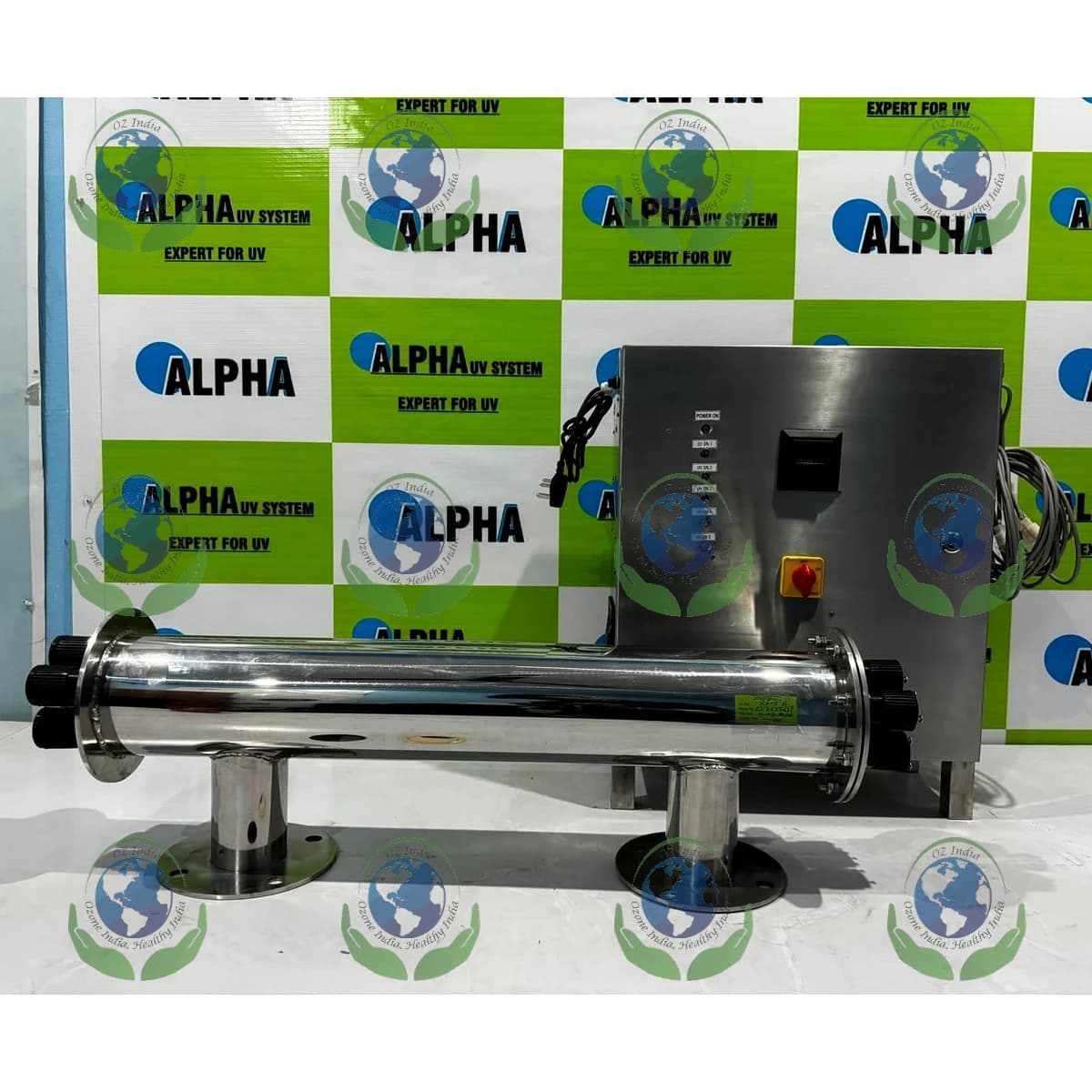
UV Pharma Series — Purified & Ultrapure Water
TOC reduction and bioburden control UV systems for pharma purified water — USP, EP, WHO GMP compliant
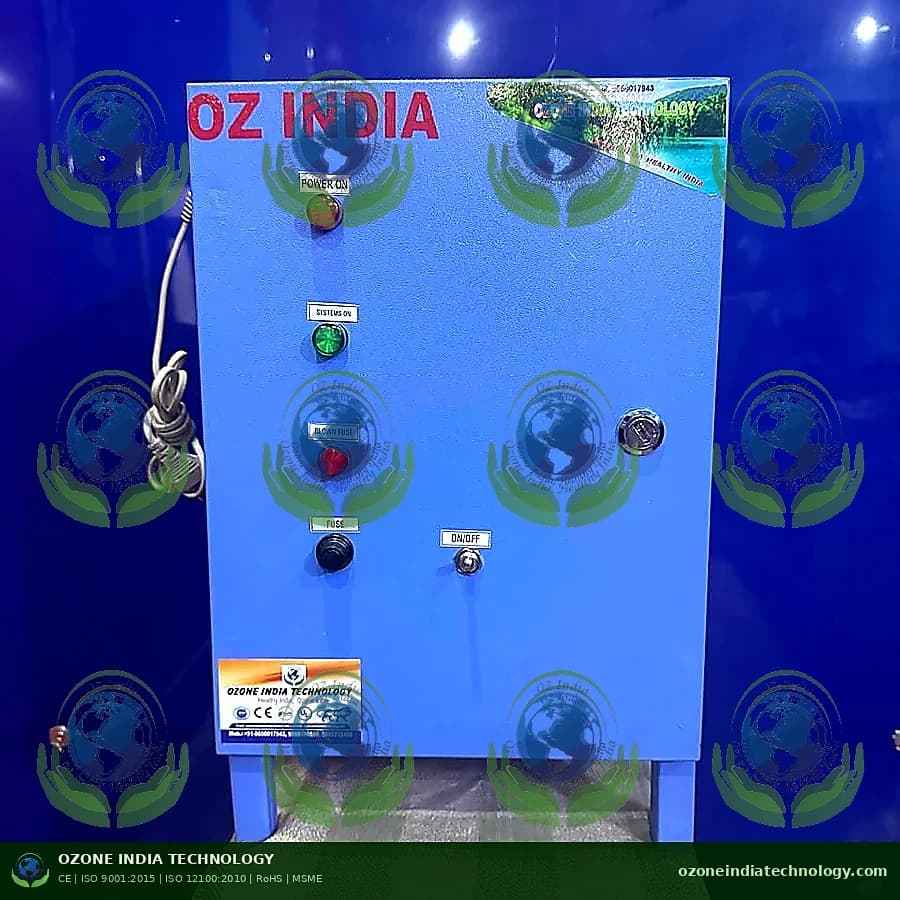
Ozone Generator — Light Industrial 5g/hr
Light industrial ozone generator for small water treatment plants and commercial disinfection
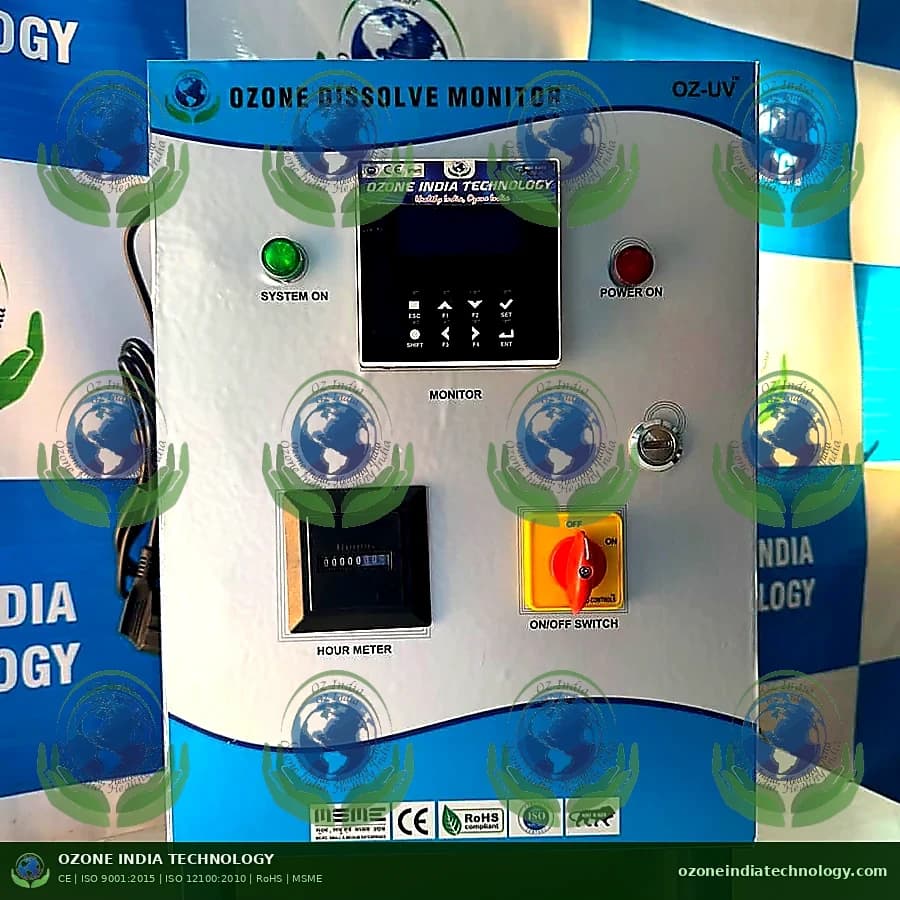
Ozone Dissolve Monitor with Contactor Support
In-line dissolved ozone monitor for water treatment process control with contactor support
SIZING GUIDE
Installation & Sizing Guide
Sizing ozone for pharmaceutical water treatment requires four inputs: total loop volume (litres), peak flow rate (L/hr), number of point-of-use outlets, and biofilm challenge level (new system or existing system with known TAMC history). The baseline ozone dose for a new pharmaceutical water loop is 0.1 mg/L residual maintained throughout the loop. Ozone demand — the amount consumed in maintaining this residual against pipe surface demand and draw-off — is typically 0.05–0.15 mg/L per hour of contact. Generator capacity calculation: Ozone generator output (g/hr) = Loop volume (m³) × Ozone demand (mg/L/hr) × 1.5 safety factor. For a 5,000 litre loop with moderate biofilm demand: 5 × 0.10 × 1.5 = 0.75 g/hr as maintenance dose, but startup and shock sanitisation require 3–5× capacity, so a 5g/hr generator minimum is standard for all pharmaceutical water loops.
UV de-ozonation sizing at each point of use requires calculating the hydraulic loading rate (L/m²·min) and ensuring the UV lamp delivers minimum 40 mJ/cm² at peak flow. For ozone destruction from 0.1 mg/L to <0.005 mg/L, UV dose of 300–400 mJ/cm² at 254 nm is typically required — OZ India UV de-ozonation modules are sized for 200% of the rated point-of-use flow to ensure compliance even during peak simultaneous draws. For WFI systems where endotoxin control is critical, OZ India recommends 0.22 µm membrane filters downstream of UV de-ozonation at each point of use — though ozone's biofilm control strategy should eliminate the endotoxin source before it reaches the filter.
Existing pharmaceutical water loops converting from hot water sanitisation to continuous ozone for pharmaceutical water treatment require a biofilm remediation protocol before ozone commissioning. Existing biofilm with embedded Gram-negative organisms will create very high initial ozone demand (0.5–1.0 mg/L) as biofilm matrix is oxidised. OZ India engineers conduct a 7-day biofilm knockdown phase at elevated ozone dose (0.3–0.5 mg/L) before transitioning to maintenance mode at 0.1–0.2 mg/L. TAMC monitoring during this transition phase documents biofilm clearance and provides baseline data for the water system validation protocol. Budget 4–6 weeks for transition protocol completion in legacy systems with confirmed TAMC excursion history.
Energy and gas consumption planning for ozone for pharmaceutical water treatment: at 0.1 mg/L maintenance dose in a 10,000-litre loop, the ozone generator operates at 20–30% of rated capacity during steady-state recirculation. The PSA oxygen concentrator runs continuously, consuming 0.4 Nm³/hr O₂ per gram of ozone produced. Full system power consumption (generator + PSA + monitoring): 8–15 kW for a 10,000-litre loop ozone for pharmaceutical water treatment system. This compares to 25–40 kW for equivalent hot water sanitisation. Dissolved ozone monitor sensors require replacement every 12–18 months (OZ India sensor cost: ₹8,000–12,000 per sensor); UV lamps for de-ozonation modules require annual replacement. The complete annual consumable cost for a 10,000-litre ozone for pharmaceutical water treatment system is ₹1.2–2.0 lakh — significantly below the energy savings versus hot water sanitisation, and a fraction of the cost of a single USFDA 483 observation response.
CASE STUDY
WFI Loop Sanitisation at Formulation Plant, Baddi Pharma Hub
A mid-sized pharmaceutical formulation plant in Baddi, Himachal Pradesh — manufacturing sterile injectables for domestic and export markets — had been operating hot water sanitisation on its 8,000-litre WFI distribution loop for six years. In 2024, a USFDA pre-approval inspection issued a 483 observation citing recurring TAMC excursions (>50 CFU/100mL against the <10 CFU/100mL action limit) and inadequate sanitisation records. The plant faced potential Voluntary Action Indicated (VAI) classification and new drug approval delays for its US-market ANDA products.
OZ India Technology designed and supplied a continuous ozone for pharmaceutical water treatment system comprising a 10g/hr oxygen-fed ozone generator with integrated PSA unit, seven PVDF Venturi injection points on the WFI loop return header, twelve point-of-use UV de-ozonation modules (40 mJ/cm², 254 nm), dissolved ozone monitors at generator outlet and loop return, and a 21 CFR Part 11 compliant PLC controller with SCADA integration to the plant BMS. Installation was completed over a single 5-day shutdown. A 30-day OQ protocol followed, recording ozone residuals every 15 minutes at all monitoring points.
Post-commissioning results demonstrated consistent dissolved ozone of 0.12–0.18 mg/L at the loop supply header and 0.06–0.10 mg/L at the most remote loop return point. Point-of-use ozone was undetectable (<0.002 mg/L) at all twelve outlets. TAMC results for the three months post-commissioning: 0 CFU/100mL at all six sampling points — a complete elimination of the excursion pattern. The plant submitted OQ/PQ data to USFDA as a CAPA response to the 483 observation, and received a USFDA No Action Indicated (NAI) classification at the follow-up inspection 11 months later, clearing the path for ANDA approvals worth ₹180 crore in annual US-market revenue.
FAQ
Frequently Asked Questions
Does ozone in pharmaceutical water loops require FDA approval or regulatory clearance?+
Ozone for pharmaceutical water treatment in loop sanitisation applications does not require a separate FDA clearance — it is a manufacturing process technology, not an added substance in the final product. USP <1231> explicitly recommends ozone for loop sanitisation as an alternative to hot water and UV systems. USFDA has positively cited ozone-based water systems in GMP inspections. Your plant's water system validation (IQ/OQ/PQ) documents ozone as the sanitisation method, which becomes part of your site master file and ANDA/NDA manufacturing section. OZ India provides a complete validation documentation package to support your regulatory submissions.
Will ozone residual at point of use affect pharmaceutical products or API quality?+
No — with properly designed UV de-ozonation at every point of use, dissolved ozone is reduced below 0.005 mg/L (effectively non-detectable) before water contacts any pharmaceutical equipment or product stream. OZ India's UV de-ozonation modules are sized to ensure ozone destruction at 200% of rated flow, providing safety margin even during peak simultaneous draws. USP <1231> and WHO TRS 970 both explicitly endorse point-of-use UV de-ozonation as the validated method for ozone removal, and this approach has been accepted by USFDA at numerous Indian plant inspections.
What is the validated ozone residual for biofilm control in pharma water loops?+
Published validation studies, including data from GEA Finnah and Walker (2003), demonstrate that 0.05–0.1 mg/L dissolved ozone maintained continuously in a pharmaceutical water loop achieves sustained biofilm prevention. OZ India designs systems to maintain 0.1–0.2 mg/L at the supply header and minimum 0.05 mg/L at the most remote loop point. During shock sanitisation cycles, we target 0.3–0.5 mg/L for 45–60 minutes. These setpoints are established during OQ and form part of your Water System Validation Protocol, with alert limits at 0.03 mg/L (investigate) and action limits at 0.01 mg/L (initiate corrective sanitisation cycle).
How does continuous ozone compare to hot water sanitisation for CDSCO Schedule M compliance?+
CDSCO Schedule M (2023 amendment) requires documented, validated, and computerised water system sanitisation records with full data integrity. Continuous ozone for pharmaceutical water treatment provides second-by-second dissolved ozone data logging with alarm history — vastly superior to manual hot water sanitisation records that rely on temperature logs and operator entries. Schedule M also requires TAMC monitoring with action and alert limits; ozone-based systems consistently achieve TAMC below the USP alert limit of 50 CFU/mL for PW and <10 CFU/100mL for WFI. OZ India's 21 CFR Part 11 compliant controller provides the full electronic records package required for CDSCO inspection.
Can ozone replace UV light for TOC reduction in pharmaceutical water?+
Ozone for pharmaceutical water treatment and UV serve complementary roles. UV at 185 nm generates hydroxyl radicals that oxidise organic carbon (TOC reduction), while UV at 254 nm destroys microbial DNA at the point of use as a de-ozonation step. Ozone for pharmaceutical water treatment provides superior TOC reduction (achieving <100 ppb from a 500 ppb baseline) and biofilm control through its residual distribution effect throughout the entire loop — something UV lamps, being point-source devices, cannot achieve remotely. The optimal pharmaceutical water system combines ozone for pharmaceutical water treatment for loop-wide biofilm control with UV de-ozonation at point of use (254 nm). OZ India designs integrated ozone-plus-UV systems and can replace legacy UV-only loop systems with a hybrid upgrade.
What happens to ozone after it sanitises the water loop — does it leave any residue?+
Ozone decomposes naturally in water to dissolved oxygen (O₂) — leaving no chemical residue whatsoever. This is a fundamental advantage of ozone for pharmaceutical water treatment over chemical biocides (hydrogen peroxide, peracetic acid) that require rinse-out validation. Ozone's decomposition half-life in pharmaceutical-grade water at 25°C is 8–12 minutes; at the point-of-use UV de-ozonation module, any remaining ozone is photolytically converted to O₂ within milliseconds. The resulting water meets all USP water quality parameters with no additional chemical treatment required. This residue-free profile is a key reason USFDA and EMA view ozone for pharmaceutical water treatment so favourably — and why it is increasingly written into new pharmaceutical plant facility standards as the default loop sanitisation approach.
How long does installation and commissioning of a pharmaceutical water ozone system take?+
For a new pharmaceutical water loop, OZ India completes ozone for pharmaceutical water treatment installation and commissioning in 7–10 working days, including instrument calibration and initial OQ data collection start. For an existing loop converting from hot water sanitisation, the ozone for pharmaceutical water treatment conversion installation typically requires a 3–5 day planned shutdown — significantly less than the 10–14 days required for piping modifications in other technology upgrades. The 30-day OQ data collection and 12-week PQ run follow commissioning on the normal production schedule. OZ India provides an integrated project schedule template that aligns with your plant's planned maintenance shut window and CDSCO/USFDA inspection calendar.
RELATED
Related Applications
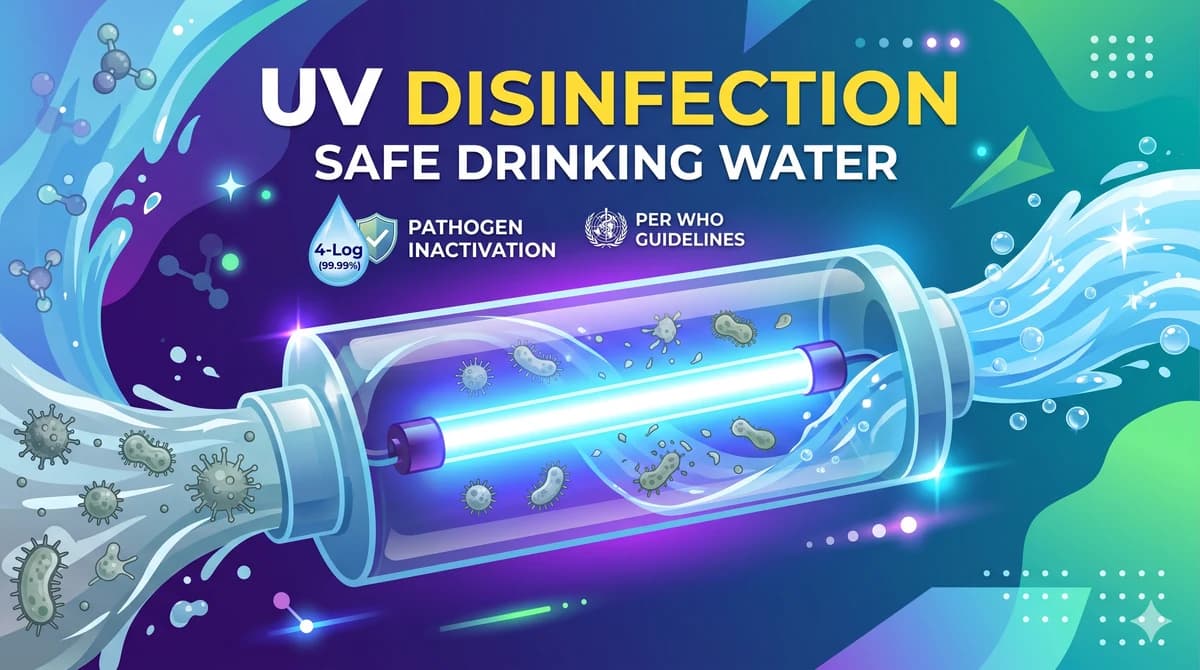
Drinking Water Treatment
IS:10500 compliant ozone and UV disinfection for bottled water, RO plants, and municipal drinking water
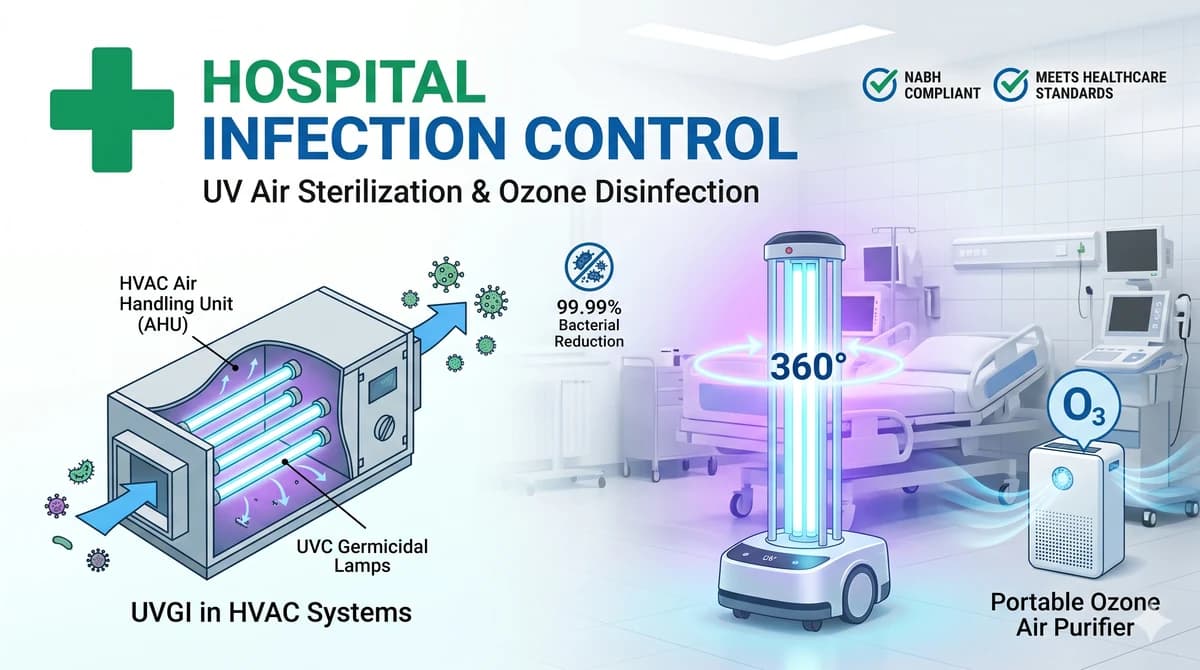
Hospital and Healthcare
NABH-aligned UV and ozone disinfection for hospital air, water, surfaces, and instrument sterilization
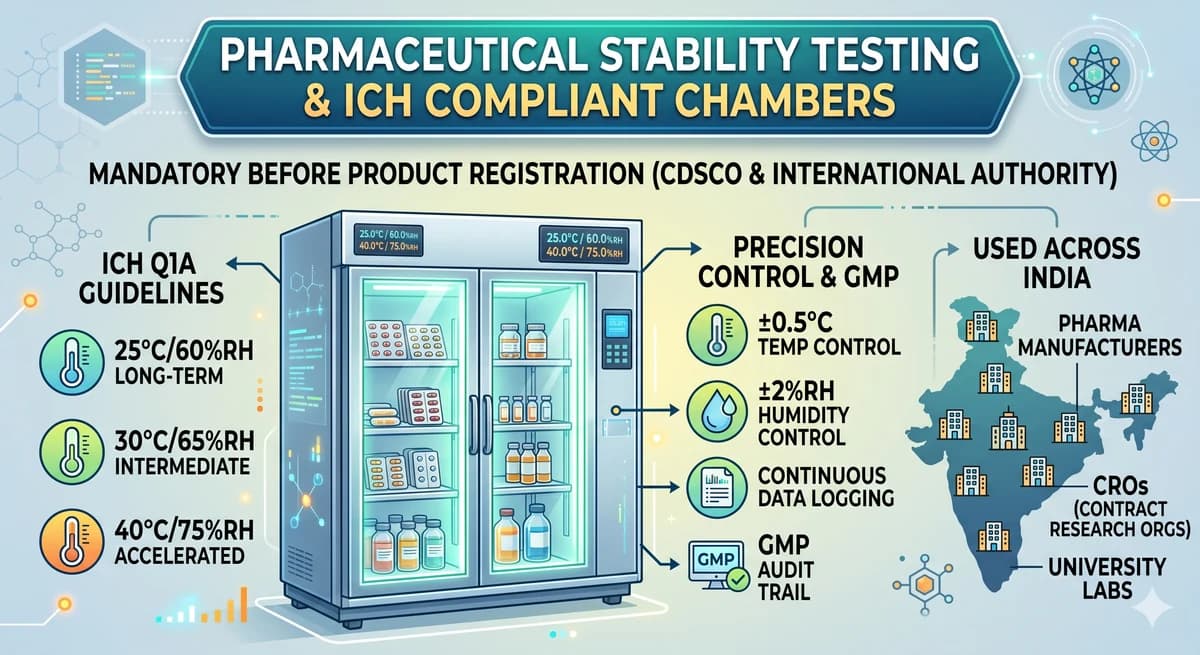
Pharmaceutical Stability Testing
ICH Q1A compliant stability chambers for Zone I–IV drug testing — CDSCO approved manufacturer
Have a question about Pharma Water?
Talk to our engineers — free technical consultation
WhatsApp Us Now