
Ozone Generator and UV System for Drinking Water Treatment
IS:10500 compliant ozone and UV disinfection for bottled water, RO plants, and municipal drinking water
THE NEED
Why Drinking Water?
21%
of diseases in India caused by unsafe water (ICMR)
IS:10500
BIS standard mandates zero coliform in drinking water
0.2 mg/L
ozone dose sufficient for drinking water disinfection
4-log
(99.99%) kill of Giardia and Cryptosporidium
FSSAI
mandates ozone for bottled water (IS:14543)
Zero
chemical taste or odour — unlike chlorination
OVERVIEW
What is Drinking Water?
India's drinking water quality crisis presents two simultaneous challenges at every scale of water supply — from the individual household drawing borewell water to the packaged drinking water producer serving a national retail network. Microbial contamination (bacteria, viruses, and protozoan parasites) causes the acute disease burden quantified by WHO (2017) at 21% of India's total morbidity, while chemical contamination (heavy metals, pesticide residues, fluoride, nitrate, industrial pollutants) contributes to chronic disease over years and decades of exposure. Ozone for drinking water treatment addresses both categories simultaneously — destroying all classes of pathogens without chemical addition, oxidising trace chemical contaminants, and leaving treated water in a superior aesthetic condition (clear, odour-free, and with improved taste) that encourages consumption of safe water over potentially contaminated alternatives.
The regulatory framework for ozone for drinking water in India is well established and favourable. BIS IS 10500:2012, India's national standard for drinking water, specifies microbiological requirements of zero E. coli and zero total coliform in 100 mL — requirements that ozone at the standard dose of 0.4 mg/L with 5-minute contact time achieves with 4-log (99.99%) safety margin. FSSAI's Food Safety and Standards (Packaged Water) Regulations specify IS 14543 as the mandatory standard for packaged drinking water, which explicitly lists ozone as a permitted disinfection treatment. For institutional water supply (hospitals, hotels, food manufacturing, educational institutions), FSSAI's food premises hygiene standards effectively require post-RO disinfection — and ozone for drinking water is the only technology that simultaneously provides disinfection, biofilm prevention in distribution piping, and CIP sanitisation capability in a single system.
The packaged drinking water industry in India is among the fastest adopters of ozone for drinking water technology, and for compelling technical reasons. India's ₹16,000 crore packaged water market (growing at 22% per year, FICCI 2023) is regulated by FSSAI and BIS IS 14543, which requires product water to achieve zero E. coli/coliform, microbiological product stability for the declared shelf life (typically 1 year for 20 L jar and PET bottle formats), and absence of chemical sanitiser residues. Chlorine — the traditional disinfectant — leaves measurable residue in the product water, creating taste defects and consumer concern. Ozone for drinking water in packaged water plants leaves zero chemical residue (ozone reverts to oxygen within 30 minutes in sealed containers), simultaneously sanitises the filling line and cap contact surfaces, and the dissolved ozone monitor provides continuous automatic quality control — ensuring every batch meets IS 14543 before the filling line is released to operate.
Municipal and piped water supply in Indian cities delivers water that — even after WTP treatment — is frequently re-contaminated during distribution through aged, intermittently pressurised pipes with infiltration from surrounding soil and sewage. Consumers who receive CPCB-compliant water at the WTP outlet often receive non-compliant water at the tap, with coliform contamination detected in 30–50% of samples from distribution systems in CGWB surveys. Ozone for drinking water at the building or apartment level — point-of-entry (POE) or point-of-use (POU) systems — provides a final disinfection barrier that is independent of municipal supply quality variability. OZ India's 2 g/hr to 10 g/hr ozone generators serve residential pump rooms treating 1,000–30,000 LPH of municipal supply, providing residents of apartments, villas, and gated communities with ozone-assured drinking water regardless of intermittent supply or distribution contamination events.
Pesticide residues in Indian vegetables and drinking water represent an underappreciated but growing consumer safety concern. FSSAI surveys (2019, 2021) consistently find organophosphate residues (chlorpyrifos, monocrotophos, profenofos) and pyrethroid residues on leafy vegetables at levels exceeding Maximum Residue Limits — and groundwater contamination by agricultural pesticides has been documented in Punjab, Haryana, Rajasthan, and coastal Andhra Pradesh. Ozone for drinking water at low doses (0.3–0.5 mg/L) achieves significant pesticide oxidation: chlorpyrifos removal of 60–80% (ozone attacks the P=S bond), malathion removal of 75–90%, and atrazine removal of 50–70% at contact times of 5–10 minutes. Kim, Yousef and Khadre (2003) in Advances in Food and Nutrition Research documented the comprehensive antimicrobial and pesticide removal efficacy of ozone in food and water applications. While ozone does not completely mineralise all pesticide compounds at drinking water doses, the combination of ozone + activated carbon (in RO systems with post-carbon block) achieves regulatory pesticide standards for most common agricultural chemicals.
THE SCIENCE
How Ozone & UV Work in Drinking Water
Ozone for drinking water at point-of-use or point-of-entry scale is generated by OZ India's compact corona discharge generators — the 2 g/hr Portable system for residential/small commercial use (up to 6,000 LPH) and the 5 g/hr Light Industrial system for apartment pump rooms and small institutional water systems (up to 15,000 LPH). These units are supplied with integral air preparation (mini compressor + dryer to -40°C dew point) and PVDF Venturi injector for connection to the outlet pipe from the overhead tank or pump. The ozone-water contact time in the pipeline downstream of the Venturi injector provides 2–5 minutes of CT at typical residential supply velocities — sufficient for 4-log coliform inactivation at a dissolved ozone residual of 0.2–0.4 mg/L. Timer control allows ozone dosing to be cycled through the overhead tank or pump room piping daily, maintaining a residual that prevents biofilm regrowth between dosing cycles.
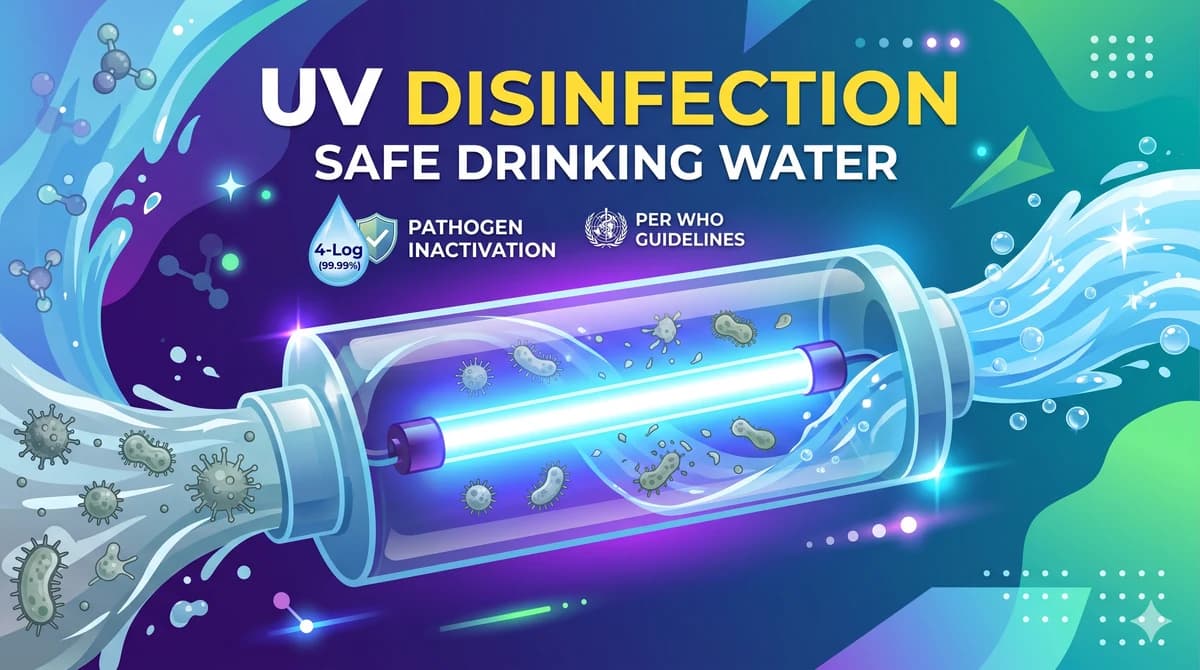
UV disinfection for drinking water treatment at the residential and commercial scale uses the photolytic inactivation principle: UV-C radiation at 254 nm is absorbed by the DNA and RNA of all microorganisms (bacteria, viruses, protozoa), causing thymine dimer formation that prevents replication without injuring the cell membrane or lysing the cell. The key advantage for drinking water is the speed — UV inactivation occurs at millisecond timescales as water flows through the UV chamber, with no waiting for chemical reactions or contact time. OZ India UV systems for drinking water are designed for inline pipe installation — the UV chamber connects between the pump outlet and the storage or distribution point, adding zero latency to the water supply. Residence time in the UV chamber at the design flow is typically 3–8 seconds, providing 40 mJ/cm² UV dose at rated UV transmittance. All OZ India drinking water UV systems include a UV intensity sensor and alarm indicator — alerting users when lamp output drops below the validated threshold.
For packaged drinking water production, ozone for drinking water follows the BIS IS 14543 process protocol: source water (borewell, municipal, or surface) undergoes multi-stage filtration (sand, activated carbon, 5-micron polishing), RO treatment (removing dissolved solids, heavy metals, nitrates), post-RO ozone treatment (0.4 mg/L dissolved ozone for 5-minute contact time in a stainless steel contact vessel), and filling under ozone atmosphere. The dissolved ozone monitor with digital display and 4–20 mA output confirms the 0.4 mg/L residual is achieved in the storage tank before the fill valve opens — providing automatic batch release control that prevents non-compliant product reaching consumers. OZ India ozone generators for packaged water plants operate in batch mode, ozonating each tank fill before filling commences — with power consumption of just 0.04–0.12 kWh per 1,000 litres of treated water.
RO systems, now standard in most Indian commercial and institutional water treatment systems, require post-RO disinfection for two reasons: (a) damaged or aged RO membranes can pass bacteria and coliform that are present in the feed water, and (b) RO permeate storage tanks and distribution piping provide ideal low-organic, low-mineral conditions for the growth of oligotrophic bacteria including Pseudomonas, Ralstonia, and Sphingomonas that are adapted to ultrapure water environments. Ozone for drinking water at 0.2–0.3 mg/L dissolved ozone in the RO permeate tank maintains a continuous bacteriostatic residual that prevents microbial regrowth without affecting the aesthetic quality of the water for consumption. OZ India recommends post-RO ozone for all institutional water systems (hospitals, hotel kitchens, food manufacturing, pharmaceutical canteens) where microbiological safety of the treated water is non-negotiable.
The UV + ozone combination provides the dual-barrier treatment that WHO (2017) recommends for any drinking water supply where source water quality is variable or inadequately characterised — which describes the majority of Indian municipal and groundwater supplies. UV provides instantaneous, chemical-free inactivation of all waterborne pathogens including Cryptosporidium (the most chlorine-resistant pathogen), while ozone provides the chemical residual that prevents recontamination in storage and distribution — the gap that UV alone cannot address. For hospitals, where immunocompromised patients face life-threatening risk from even trace levels of opportunistic waterborne pathogens (Legionella, Pseudomonas aeruginosa, non-tuberculous Mycobacteria), OZ India recommends the full multi-barrier approach: sand filter + activated carbon + RO + UV + ozone + UV deozonation — providing five independent barriers against microbiological contamination of the drinking water supply.
THE SOLUTION
Ozone India Technology Solution
OZ India Technology's drinking water UV systems span the complete range from residential to municipal scale: 100–500 LPH (under-sink or pump room, suitable for a household or small office of 10–20 people), 1,000–5,000 LPH (apartment pump room, serving 50–200 residents), 10,000–50,000 LPH (hotel, hospital, or institutional campus water supply), 1,00,000 LPH (large residential township or industrial campus), and 2,00,000 LPH (municipal intake or large commercial complex). All configurations use 316L stainless steel chambers with NSF/ANSI 61-compliant food-grade wetted materials, PHILIPS UV-C lamps with 8,000-hour rated life, and quartz sleeves with >90% 254 nm transmission. The UV intensity sensor in every system continuously monitors lamp output, providing real-time dose confirmation and triggering lamp replacement alarm at 70% of initial intensity — before dose drops below the validated 40 mJ/cm².
OZ India's ozone for drinking water systems for packaged water plants and institutional use are available in three standard configurations: 2 g/hr compact system (for plants up to 6,000 LPH, single-phase 230V), 5 g/hr standard system (for plants up to 15,000 LPH, single-phase 230V), and 10 g/hr industrial system (for plants up to 30,000 LPH, three-phase 415V). Each configuration includes integral air preparation, PVDF Venturi injector, PVDF NRV, stainless steel contact vessel (optional, for bottled water batch contact), dissolved ozone monitor with digital display and 4–20 mA output, and CE Declaration of Conformity. For IS 14543 bottled water compliance, OZ India provides a calibration certificate for the dissolved ozone monitor and a process description letter confirming the system is designed for FSSAI IS 14543 packaged drinking water application.
Complete RO + UV + ozone integrated systems for drinking water treatment are OZ India's most popular product for institutional and commercial clients — hospitals, hotel kitchens, food manufacturing plants, pharmaceutical canteens, and educational institutions. The integrated system is skid-mounted, factory-tested, and delivered as a plug-and-play unit: sand filter (auto-backwash) + activated carbon filter + RO membrane array + UV chamber + ozone generator + dissolved ozone monitor, all mounted on a 316L SS frame with a single control panel (auto/manual/alarm). Standard capacities: 1,000 LPH, 2,000 LPH, 5,000 LPH, 10,000 LPH. Site connection requires only inlet water supply, drain, and 230/415V power — OZ India engineers complete commissioning and BIS water quality testing within 1–2 days of delivery.
OZ India's post-installation support for drinking water systems is designed for the reality that most institutional and commercial operators are not water treatment specialists. The 1-year warranty covers all equipment defects; annual service contract (available at ₹6,000–25,000/year depending on system size) includes lamp replacement, RO membrane performance check, UV sensor calibration, dissolved ozone sensor calibration and membrane replacement, and ozone generator electrode inspection — all conducted by OZ India service engineers at the client's premises. Replacement lamps are stocked ex-Greater Noida and shipped same day for orders received before 14:00 IST. WhatsApp support (9650017943) provides real-time troubleshooting for operators who encounter system alarms between scheduled service visits.
PERFORMANCE
Without vs With OZ India Treatment
| Parameter | Without Treatment | With OZ India System |
|---|---|---|
| E. coli/Coliform inactivation | Variable — depends on Cl₂ dose/contact | 4-log at 0.3 mg/L O₃ / 40 mJ/cm² UV |
| Cryptosporidium kill | Cl₂ ineffective at practical doses | 3-log by ozone (CT 15 mg/L·min) |
| Chemical residue in product | Chlorine taste/odour detectable | Zero residual — ozone reverts to O₂ |
| Biofilm in storage tank | Regrows between chlorination cycles | Prevented by ozone residual (0.2 mg/L) |
| Pesticide residues | Not removed by conventional treatment | 60–80% reduction by ozone oxidation |
| IS 14543 / IS 10500 compliance | Risk of microbiological failure | Consistent compliance with monitoring |
| Annual operating cost (₹/kL) | Cl₂: ₹1.5–3.0/kL chemicals + handling | O₃+UV: ₹0.5–1.0/kL electricity only |
| FSSAI filling line sanitation | Separate chemical CIP required | Ozone simultaneously sanitises line |
PERFORMANCE DATA
Technical Performance Data
Reference data for ozone treatment system design and validation — applicable to Drinking Water applications. All data per standard water treatment engineering practice (AWWA, WHO, CPCB guidelines).
Pathogen Log Inactivation at 3 mg/L Ozone (CT = 45 mg·min/L)
BOD Reduction (%) vs Ozone Dose — Typical STP/ETP Secondary Effluent
E. coli Log Inactivation vs Contact Time at 3 mg/L Ozone
System Sizing Guide — Plant Flow Rate vs Ozone Generator Capacity
RECOMMENDED EQUIPMENT
Products for Drinking Water
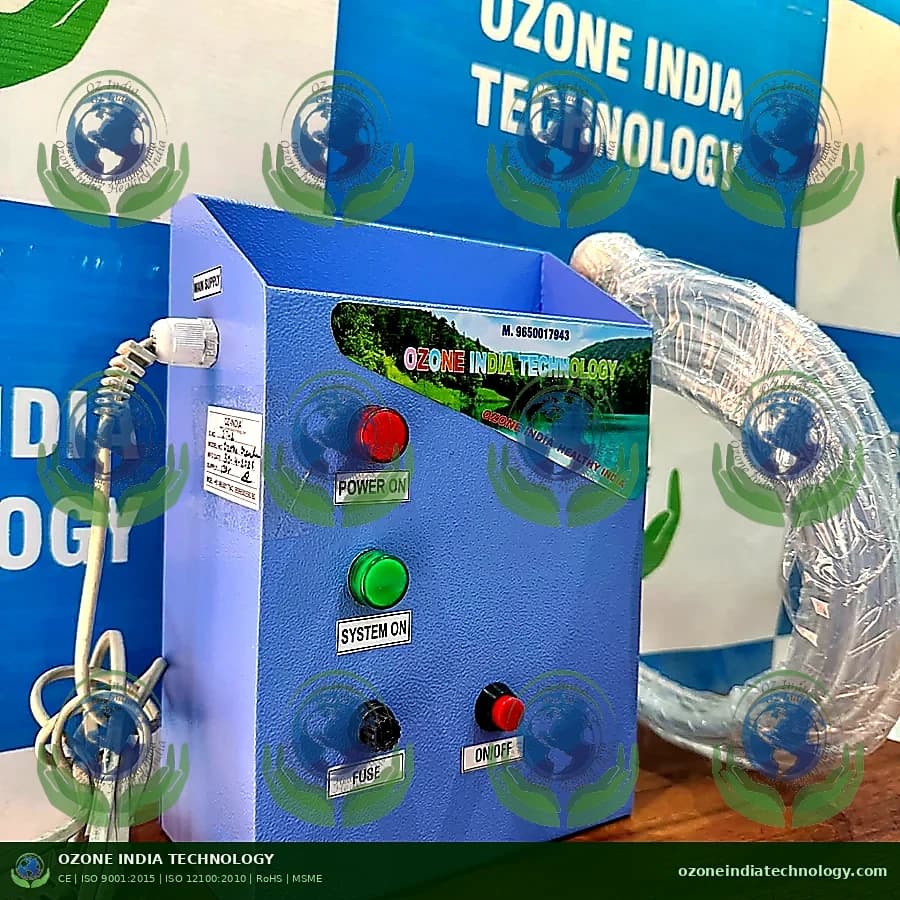
Ozone Generator — Portable 2g/hr
Compact corona discharge ozone generator for small-scale water treatment and air purification
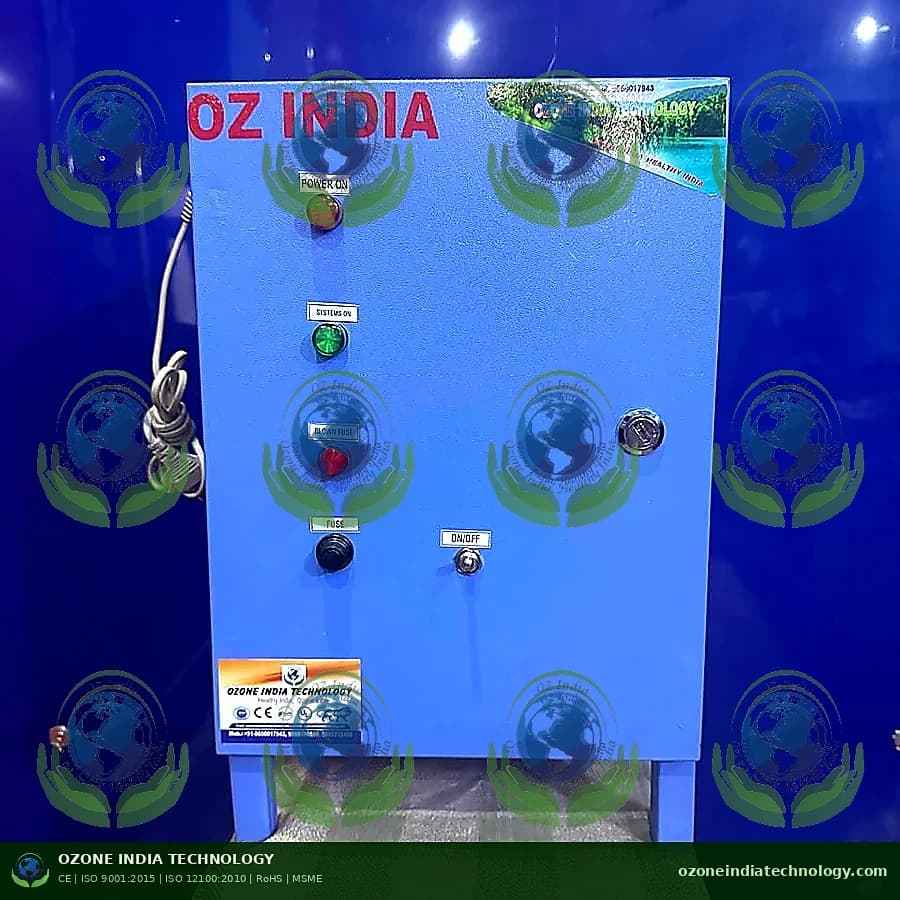
Ozone Generator — Light Industrial 5g/hr
Light industrial ozone generator for small water treatment plants and commercial disinfection
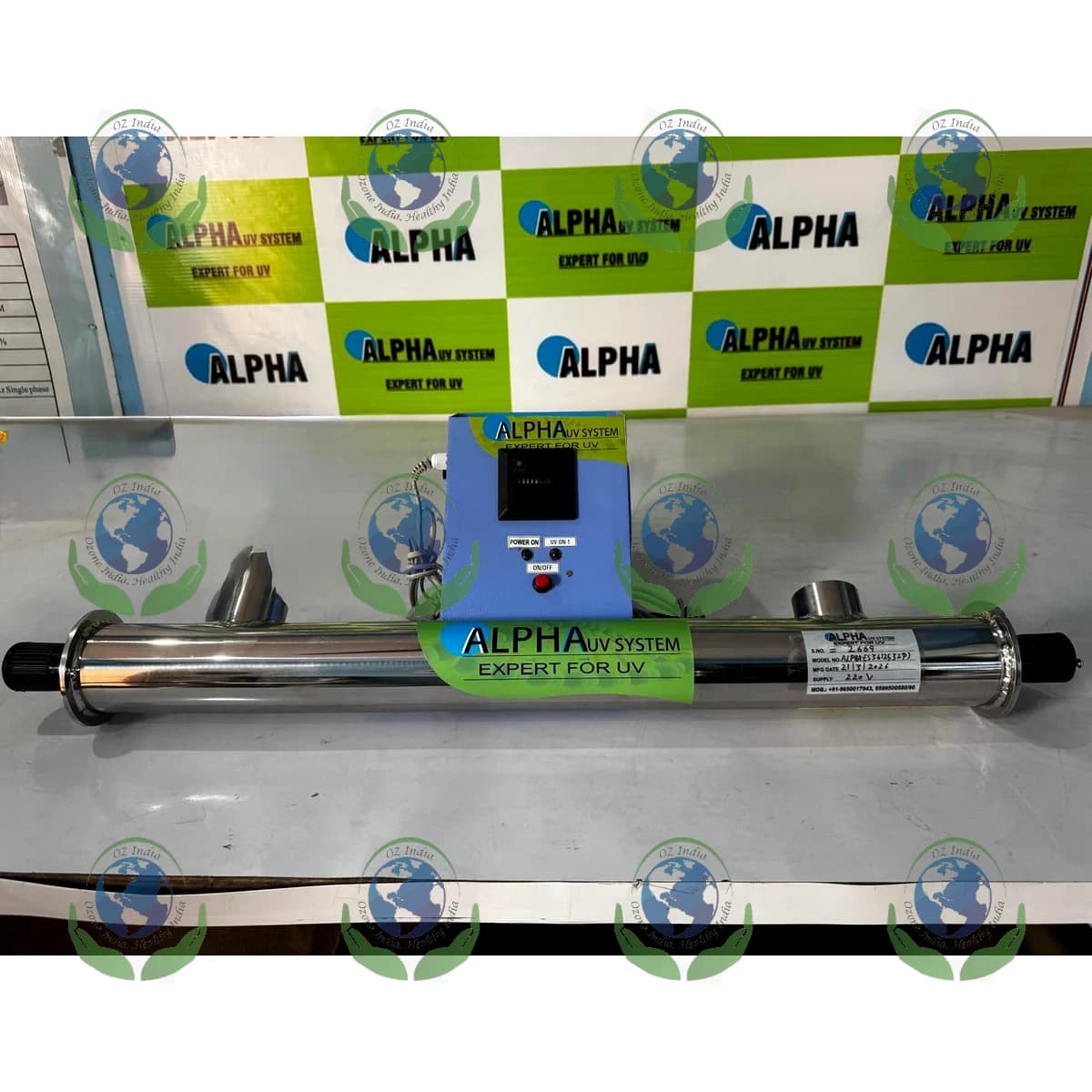
UV Compact Series — 100 to 2000 LPH
Compact inline UV water disinfection — 100 to 2000 LPH — SS304 chamber, OEM and commercial ready
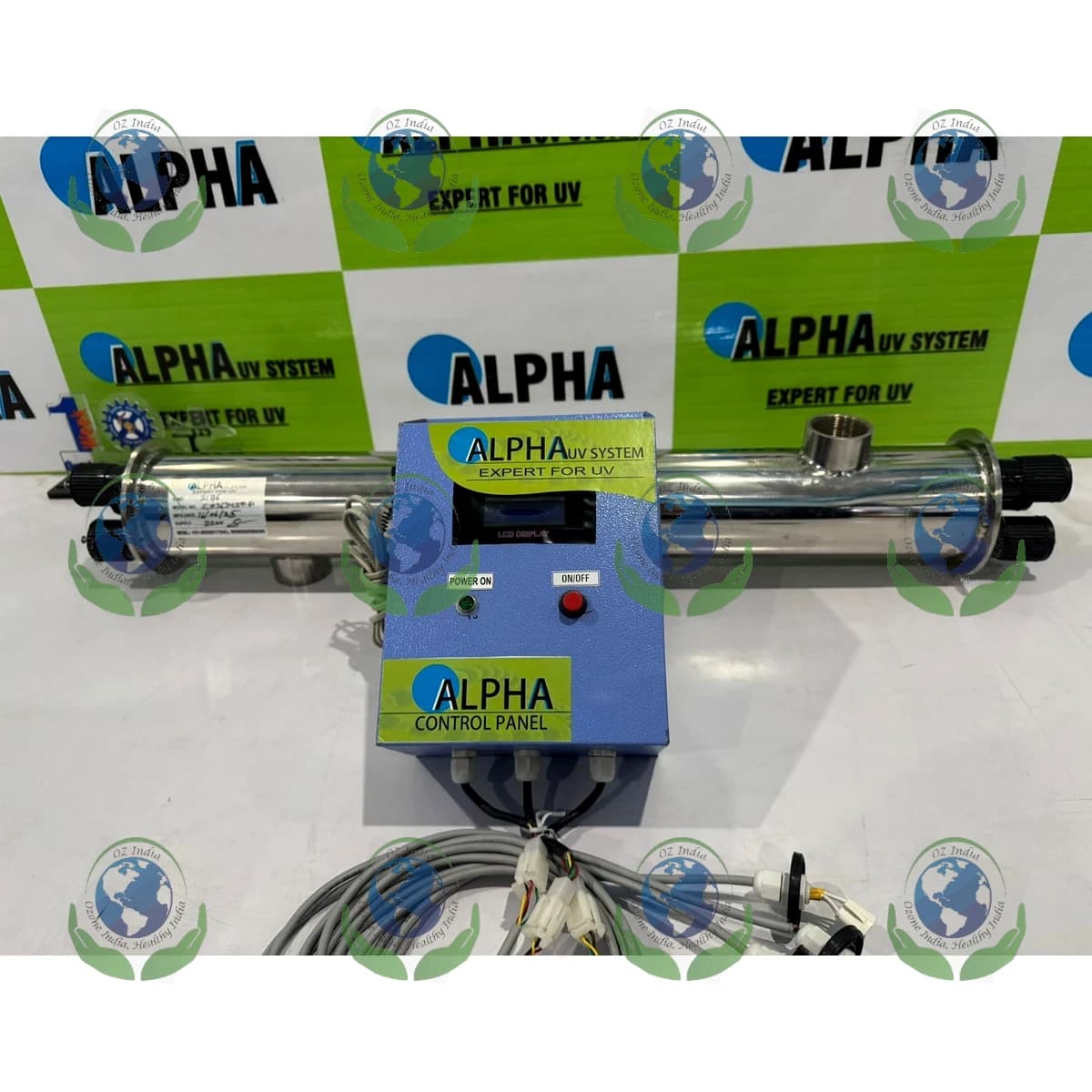
UV Industrial Series — 2000 to 20000 LPH
Industrial UV water disinfection 2000–20000 LPH — multi-lamp SS304 reactor, SCADA ready
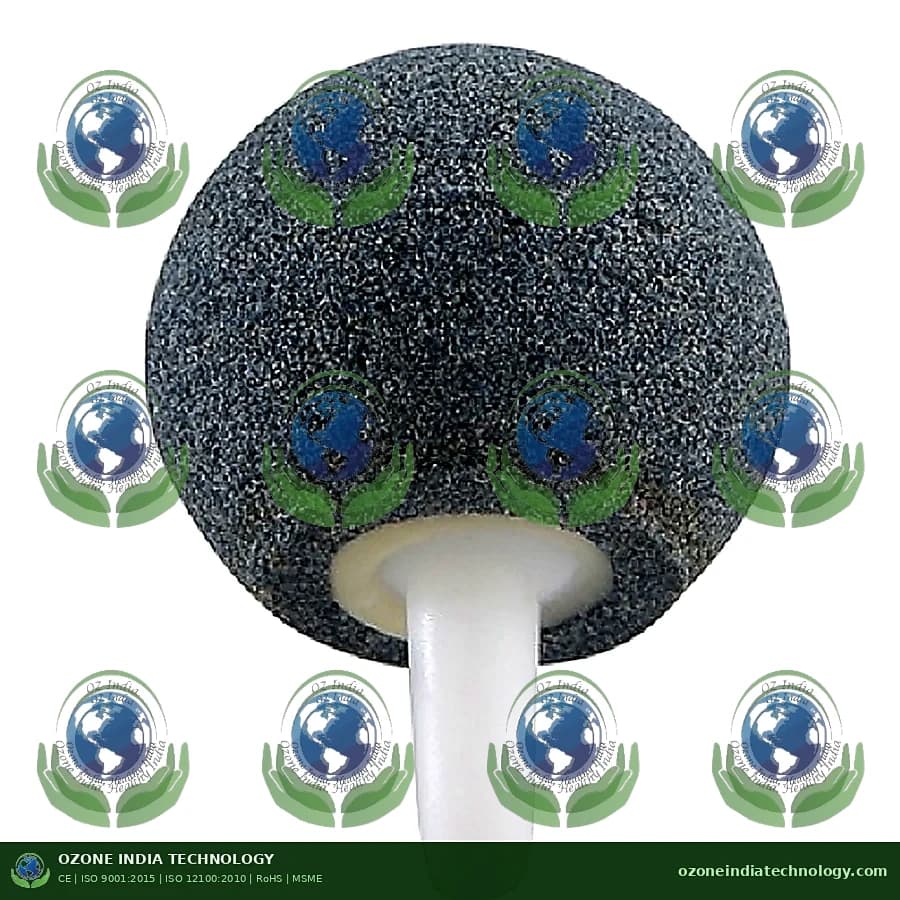
Ozone Air Diffuser
PTFE and ceramic porous disc ozone air diffuser for bubble dissolution in ozone contact tanks
SIZING GUIDE
Installation & Sizing Guide
Sizing a UV system for ozone for drinking water applications starts with two parameters: daily water consumption (litres per day, LPD) and UV transmittance (UVT%) of the inlet water at 254 nm. UVT is the single most important variable: RO permeate has UVT 95–99%; activated carbon filtered municipal water has UVT 85–95%; raw groundwater may have UVT 60–85% depending on iron, colour, and organic content. At lower UVT, more UV lamp power is required to deliver 40 mJ/cm². OZ India sizes UV systems based on peak hour demand (typically 1.5–2× average daily demand ÷ 8 hours), ensuring the UV system can handle peak demand at the validated dose. For a hospital consuming 50,000 LPD with peak hour demand of 12,500 LPH (50,000 ÷ 8 × 2) and UVT of 92%, OZ India recommends the 15,000 LPH UV system with auto intensity control.
Ozone generator sizing for drinking water treatment uses a simple formula: capacity (g/hr) = Flow (LPH) × target dissolved ozone (mg/L) × 1.3 (safety factor). At 0.3 mg/L target dissolved ozone: 10,000 LPH × 0.3 × 1.3 = 3,900 mg/hr = 3.9 g/hr → OZ India 5 g/hr system. At 0.4 mg/L (IS 14543 packaged water standard): 5,000 LPH × 0.4 × 1.3 = 2,600 mg/hr = 2.6 g/hr → OZ India 5 g/hr system covers up to 9,615 LPH at 0.4 mg/L. OZ India's standard sizing table for ozone for drinking water: 2 g/hr covers up to 5,000 LPH at 0.4 mg/L; 5 g/hr covers up to 12,000 LPH; 10 g/hr covers up to 25,000 LPH; 25 g/hr covers up to 60,000 LPH — all at 0.4 mg/L with 1.3 safety factor.
For RO plant integration, the UV and ozone system sizes are based on RO permeate flow, not feed flow. With 75% RO recovery (typical for most Indian commercial RO systems), a 10,000 LPH feed produces 7,500 LPH permeate — this is the flow that the UV and ozone systems must treat. The storage tank between RO and distribution also affects ozone sizing: a larger tank provides more contact time for dissolved ozone to achieve the target CT at lower ozone concentration. OZ India recommends storage tank sizing of 2–4 hours of average demand, with ozone dosing controlled to maintain 0.2–0.3 mg/L dissolved ozone in the tank at all times — monitored by the in-tank dissolved ozone sensor. Contact OZ India with your daily consumption, RO system specification, and water analysis for a complete integrated system design with layout drawings.
Cost and payback analysis for ozone for drinking water installations: capital cost for OZ India 2 g/hr system (residential/small commercial): ₹45,000–65,000; 5 g/hr (apartment/institution): ₹85,000–1,20,000; 10 g/hr (larger institution): ₹1,50,000–2,50,000. Electricity operating cost: 2 g/hr = 0.06 kWh × ₹7 = ₹0.42/hr; 5 g/hr = 0.15 kWh × ₹7 = ₹1.05/hr; 10 g/hr = 0.25 kWh × ₹7 = ₹1.75/hr — for 8 hours/day operation, annual electricity cost is ₹1,200–5,100. Annual UV lamp replacement: ₹1,800–8,000 depending on lamp size. Total annual operating cost for a 5 g/hr ozone + UV system: ₹5,000–12,000 — less than ₹1 per 1,000 litres treated at 10,000 LPH throughput. Against the cost of bottled water for institutional canteens (₹20–50 per 20 L jar = ₹1,000–2,500 per kL), ozone for drinking water treatment delivers 95–99% cost reduction.
CASE STUDY
IS 14543 Compliance for Packaged Drinking Water Plant — Noida, UP
A 15,000 LPH packaged drinking water (PDW) plant in Noida's Phase 2 industrial area was producing 20 L jars for retail sale under a BIS IS 14543 licence. Despite using an RO system and UV treatment, the plant's FSSAI compliance audit found E. coli in 2 of 10 finished product samples — a critical finding threatening BIS licence suspension and FSSAI penalty. Investigation identified biofilm in the 2,000 L post-RO storage tank and filling line as the source of contamination; UV alone could not prevent biofilm regrowth between production runs.
OZ India Technology supplied a 5 g/hr ozone for drinking water system: compact single-phase ozone generator, PVDF Venturi injector at the storage tank inlet, in-tank dissolved ozone monitor with fill-line interlock (filling line disabled when dissolved ozone <0.35 mg/L), and a second ozone injection point at the cap contact zone of the filling machine. The system was commissioned and BIS production protocols updated within 10 working days of purchase order placement.
Post-installation FSSAI compliance audit: zero E. coli in 10 consecutive finished product samples over 3 months. BIS IS 14543 licence retained. The dissolved ozone monitor's automatic interlock ensured that ozone for drinking water standard (0.4 mg/L in tank) was achieved before every fill — eliminating the possibility of human error in compliance monitoring. Plant manager reported zero FSSAI observations in the subsequent scheduled compliance inspection. Annual chemical sanitiser cost for line CIP, previously ₹3.8 lakh/year, reduced to zero — the ozone system now performs all surface sanitisation without any chemical purchase.
FAQ
Frequently Asked Questions
Is ozone for drinking water safe — does it leave any harmful residual?+
Ozone for drinking water treatment is safe when used at correct doses. At the drinking water standard dose of 0.2–0.4 mg/L dissolved ozone with 5-minute contact time, ozone reverts to oxygen completely within 15–30 minutes in stored water — leaving zero chemical residual at the point of consumption. WHO (2017) Guidelines for Drinking-Water Quality confirm that ozone residual at the point of use is not a health concern at doses used for drinking water disinfection. OZ India dissolved ozone monitors ensure the dose remains within the prescribed range, preventing over-dosing that could impart a transient 'swimming pool' odour to the water.
Does FSSAI require ozone for packaged drinking water (IS 14543)?+
FSSAI's Food Safety and Standards Regulations and BIS IS 14543 permit ozone as an acceptable disinfection technology for packaged drinking water — explicitly listed alongside UV and chlorination as approved treatment methods. Ozone for drinking water is now the preferred choice for packaged water producers because it leaves no chemical residue in the finished product, simultaneously sanitises the filling line and cap contact surfaces, and the dissolved ozone monitor provides automatic quality control — functions that UV and chlorination alone cannot combine. BIS and FSSAI inspectors accept dissolved ozone monitoring records as compliance documentation.
What is the difference between ozone and UV for residential drinking water?+
UV provides instantaneous point-of-use disinfection — ideal for the final disinfection step just before consumption, requiring no contact time and leaving no residual. Ozone for drinking water provides both disinfection and a short-term residual that prevents recontamination in overhead tanks and pipes between dosing cycles — more suitable for treating stored water in tanks. For most residential applications with an overhead tank, OZ India recommends ozone for the tank (preventing biofilm and maintaining residual) and UV at the tap point (final pathogen kill before consumption). For direct flow systems without storage tanks, UV alone is sufficient.
How long does ozone last in a drinking water storage tank?+
Ozone half-life in clean drinking water at 25°C is approximately 15–20 minutes; in water with organic matter (typical borewell or municipal supply), half-life is 5–10 minutes. A 1,000-litre overhead tank treated with ozone to 0.4 mg/L will have <0.05 mg/L dissolved ozone after 60 minutes at 25°C — safe for consumption and with all pathogens inactivated during the contact period. OZ India timer controllers dose the overhead tank each morning during the 1–2 hours of minimum household consumption, ensuring the full dose is applied to the total tank volume and sufficient contact time is achieved before peak morning demand.
Can ozone for drinking water remove fluoride?+
Ozone alone does not remove fluoride from drinking water — fluoride removal requires adsorption (activated alumina or bone char) or RO membrane treatment. However, ozone for drinking water oxidises dissolved organic compounds in fluoride-affected groundwater that otherwise interfere with RO membrane performance and activated alumina capacity, indirectly improving fluoride removal efficiency in combined systems. For fluoride removal from groundwater, OZ India recommends ozone pre-oxidation + activated alumina or RO — ozone improves the efficiency and longevity of both downstream fluoride removal technologies.
How often do UV lamps need replacing in a drinking water treatment system?+
OZ India UV systems for drinking water use UV-C lamps with 8,000-hour rated output life — approximately 11 months at continuous 24×7 operation, or 14 months at 16 hours/day. The integrated UV intensity sensor provides a real-time lamp-age indicator: when output drops below 70% of initial value, the system alerts for lamp replacement before dose falls below the validated 40 mJ/cm² threshold. Replacement lamps are stocked ex-Greater Noida and shipped within 24 hours of order. OZ India Annual Maintenance Contracts include lamp replacement as a standard item — ensuring continuous ozone for drinking water system performance without operator action.
What water quality results can I expect from OZ India's ozone for drinking water system?+
Post-treatment water quality from OZ India ozone for drinking water systems combined with RO: TDS as per RO system (typically 50–150 mg/L for Indian groundwater feed), zero E. coli/coliform (100% inactivation), zero detectable ozone residual at point of use (ozone degassed within 30 minutes), turbidity <1 NTU, no objectionable taste or odour, pesticide residues reduced by 60–80% from ozone pre-treatment. All OZ India systems are supplied with a commissioning water quality test from a NABL-accredited laboratory as part of the installation package — providing documented baseline performance data for FSSAI or BIS compliance files.
RELATED
Related Applications
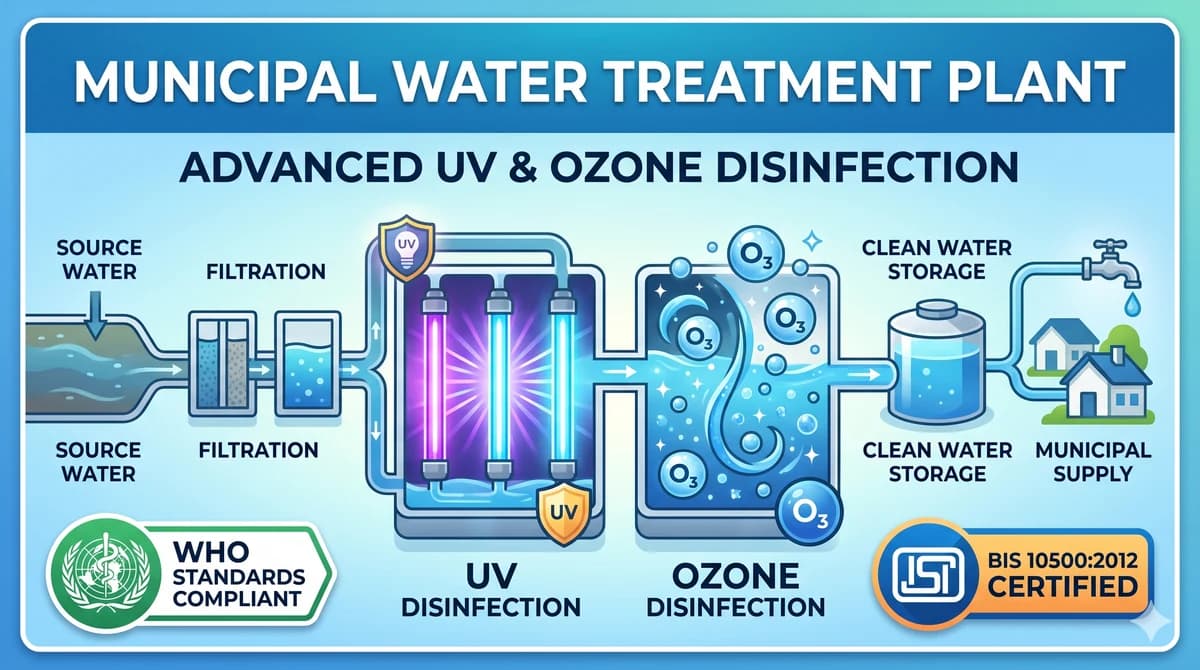
Water Treatment Plant (WTP)
Ozone and UV for superior raw water treatment — iron, manganese, taste, odour, and Cryptosporidium control
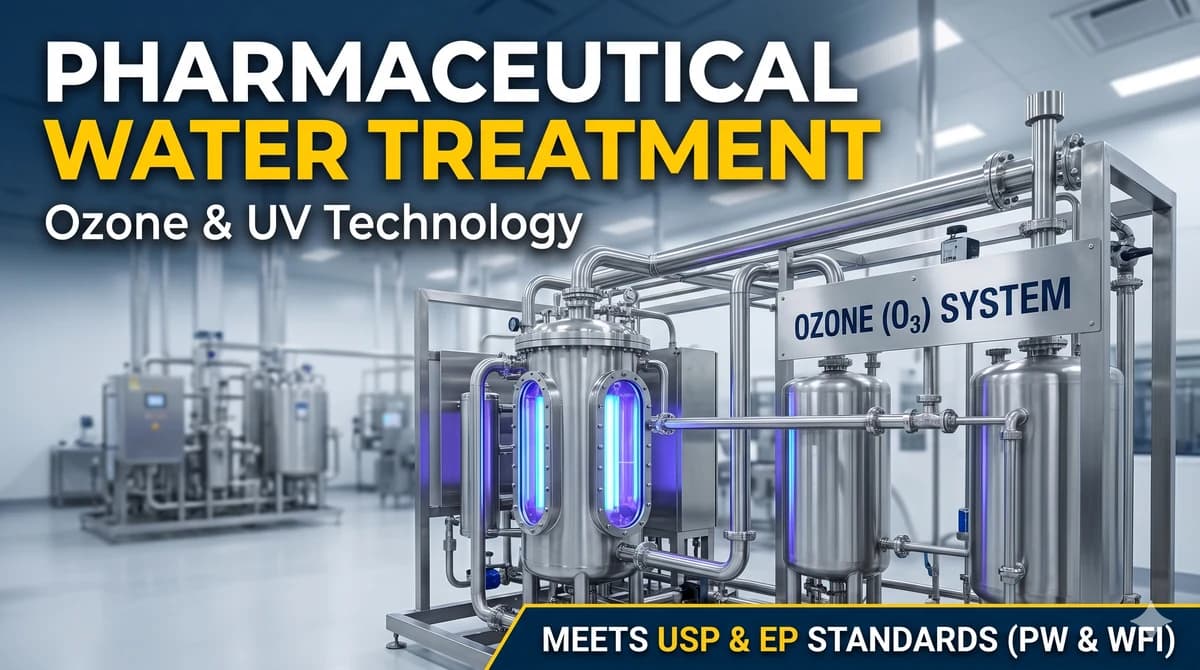
Pharmaceutical Water Treatment
USP <1231> and WHO GMP compliant ozone and UV systems for purified water, WFI, and CIP loops
Food Processing and Safety
FSSAI-compliant ozone disinfection for food contact surfaces, CIP, cold storage, and vegetable washing
Have a question about Drinking Water?
Talk to our engineers — free technical consultation
WhatsApp Us Now