
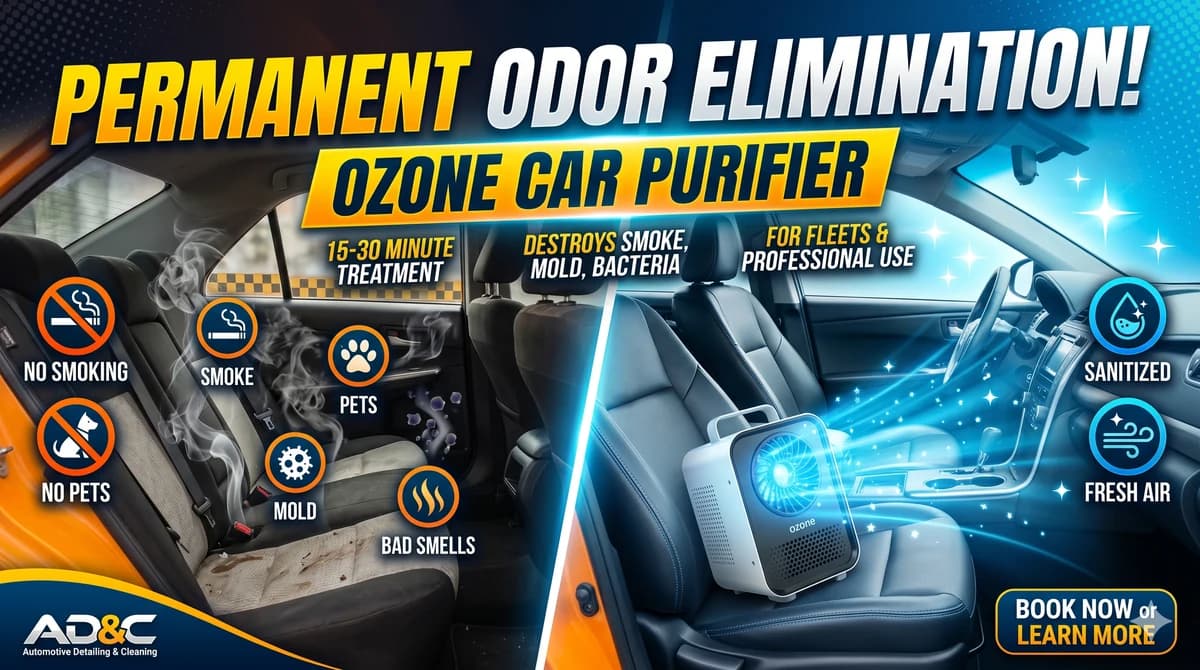
Ozone Generator in Automotive Detailing and Cleaning
Professional ozone treatment for car interiors — eliminates smoke, pet, and mould odours permanently
THE NEED
Why Automotive?
30 min
ozone treatment eliminates 10-year smoke odour
99.9%
bacteria and mould kill on car upholstery
Zero
masking — ozone destroys odour molecules, not covers
HVAC
car air-con systems harbour Legionella — ozone eliminates
₹5000+
premium charged for ozone detailing service
1 ppm
ozone dose sufficient for full car cabin treatment
OVERVIEW
What is Automotive?
The ozone car purifier has emerged as the most effective and scientifically validated tool for vehicle interior sanitisation, odour elimination, and volatile organic compound (VOC) reduction in India's rapidly growing automotive detailing and used-car market. India's used car market has grown at 15% annually since 2020 — with platforms like OLX Autos, Cars24, and Spinny processing over 4.5 million used vehicle transactions annually — and vehicle interior quality, including odour and hygiene, is cited as the primary purchase deterrent in 38% of used car rejections. Simultaneously, India's car rental sector (Zoomcar, Revv, OYO Drivezy) and app-based mobility fleet operators (Ola, Uber, BluSmart) manage fleets of 500–5,000 vehicles where tobacco odour, passenger body odour, and microbial contamination between riders are daily operational challenges that ozone for automotive detailing resolves definitively.
New vehicle VOC off-gassing — the 'new car smell' that many buyers find pleasant but which contains a toxic cocktail of formaldehyde, benzene, toluene, ethylbenzene, and xylene (BTEX compounds) leaching from dashboards, seat foam, carpeting, and adhesives — is an increasing health concern globally. WHO classifies formaldehyde as a Group 1 carcinogen, and the China GB/T 27630 new vehicle interior air quality guideline (adopted in 2022 as mandatory) sets formaldehyde below 100 μg/m³ and BTEX below 1.5 mg/m³ in new vehicle cabins. Indian automotive OEMs exporting to China and EU already implement ozone for automotive detailing as a VOC treatment step at vehicle end-of-line quality control — using ozone at 5–10 ppm for 30–60 minutes to oxidise formaldehyde and BTEX compounds in sealed new-vehicle cabins before dealer delivery. OZ India Technology's ozone car purifier is used in this OEM factory application by several passenger car manufacturers at their Indian plants.
Tobacco smoke odour elimination is the highest-volume individual application for ozone for automotive detailing in India. A single heavily smoked-in vehicle interior contains nicotine and tar deposits on all soft surfaces — headliner, seat fabric, carpet, dashboard — that off-gas volatile nicotine metabolites and 4,000+ combustion byproducts for months to years. Conventional detailing methods — vacuuming, shampooing, fabric sprays — mask tobacco odour for days to weeks before it returns. Ozone car purifier treatment — 3–5 ppm in sealed cabin for 2–3 hours — oxidises nicotine, tar volatiles, and combustion byproducts at a molecular level, permanently eliminating tobacco odour rather than masking it. OZ India's ozone car purifier generates 5g/hr of ozone gas from ambient air through corona discharge, sufficient to treat a standard passenger car cabin (4–8 m³) in 2 hours and an SUV or MPV in 3 hours.
Mould and microbial contamination of vehicle HVAC systems is a widespread and underappreciated problem in India's humid coastal cities — Mumbai, Chennai, Kochi, Visakhapatnam — and during the monsoon season across the country. Vehicle air conditioning evaporators and ductwork accumulate moisture between use, creating ideal conditions for Aspergillus, Cladosporium, and Staphylococcus aureus colonisation. EPA studies (2000, EPA 402-K-97-002) on HVAC duct contamination documented that biological growth in air handling systems can cause musty odours, respiratory sensitisation, and sick building syndrome symptoms analogous to sick car syndrome. Ozone for automotive detailing specifically targeting HVAC systems — using an ozone car purifier placed in the passenger footwell with the AC recirculation mode active — delivers ozone through the ductwork to destroy mould and bacteria at source. This is the only effective treatment for HVAC mould in vehicles; physical cleaning of automotive HVAC evaporators requires partial dashboard disassembly and is beyond the reach of most detailing operations.
COVID-19 and post-pandemic hygiene consciousness has permanently elevated consumer expectations for vehicle interior sanitisation in India — particularly in shared mobility (Ola, Uber, Rapido) and car rental. OZ India's ozone car purifier achieves 99.9% inactivation of SARS-CoV-2 and other enveloped viruses on vehicle interior surfaces at 3–5 ppm ozone for 30 minutes, as demonstrated in peer-reviewed studies on ozone's virucidal efficacy. Ola Cabs, in its 2022 fleet hygiene protocol, included ozone for automotive detailing as an approved sanitisation method between ride-share and rental trips. India's MoRTH (Ministry of Road Transport and Highways) Motor Vehicle Act's vehicle fitness standards and ARAI emission testing protocols are increasingly accompanied by interior air quality awareness — and fleet operators that document ozone sanitisation protocols between rides demonstrate duty of care to passengers and regulatory readiness for potential future IAQ regulations. ASHRAE Standard 62.1-2022 on acceptable indoor air quality, while not vehicle-specific, provides the IAQ benchmarks that ozone for automotive detailing achieves when treating vehicle cabins.
THE SCIENCE
How Ozone & UV Work in Automotive
OZ India's ozone car purifier operates on corona discharge: ambient air passes through the generator's dielectric barrier discharge cell where high-voltage (5–8 kV) alternating current creates plasma micro-discharges that convert O₂ to O₃. The generator produces 3–5g/hr of ozone at 2–5% concentration in dry air, which is delivered to the vehicle cabin through a flexible PTFE outlet tube placed inside the vehicle with all windows closed. During the ozone car purifier treatment cycle, ozone at 3–5 ppm permeates all surfaces — headliner fabric, seat upholstery, carpet, door trims, dashboard plastics, and HVAC ducting when run in recirculation mode. Ozone molecules react directly with odour-causing and VOC compounds (oxidation potential 2.07V), breaking molecular bonds and converting organic compounds to CO₂, H₂O, and simple inorganic acids that are themselves odourless and non-toxic.
Tobacco smoke odour elimination using an ozone car purifier requires understanding the chemistry of smoke residue. Tobacco smoke deposits a complex mixture of nicotine (C₁₀H₁₄N₂), acrolein (CH₂CHCHO), acetaldehyde, formaldehyde, and 4,000+ combustion byproducts on all vehicle surfaces. Nicotine itself is a relatively large, nitrogen-containing organic molecule that ozone attacks at the pyrrolidine ring, generating oxidation products including cotinine and nicotinic acid — both non-volatile and non-odorous, remaining deposited on surfaces rather than off-gassing. At 3–5 ppm ozone with 2–3 hours exposure, surface nicotine concentrations are reduced by 80–95%, and volatile off-gassing compounds are oxidised to non-detectable concentrations. The treatment is permanent — not masking — because the odour-generating compounds are chemically transformed, not covered by fragrances. A single ozone car purifier treatment for heavy tobacco odour may be followed by a second treatment 24 hours later for extreme cases.
Ozone for automotive detailing in HVAC duct treatment requires a specific protocol: the ozone car purifier is placed in the passenger footwell with all windows and doors closed; the vehicle's AC system is set to maximum fan speed on fresh-air mode for 5 minutes to pre-load the ducts; then switched to recirculation mode for the 30–60 minute ozone treatment period. This forces ozone-laden cabin air through the evaporator, blower, and all duct branches — reaching Aspergillus and Staphylococcus colonies on the evaporator surface and in the duct lining. EPA (2000, EPA 402-K-97-002) data on HVAC biological contamination confirms that ozone at 1–3 ppm with 30–60 minutes exposure is sufficient for mould inactivation in enclosed ductwork. Post-treatment, the cabin should be ventilated for 30–60 minutes (all windows open, AC on fresh-air mode) before occupancy — allowing ozone to decay from the 3–5 ppm treatment concentration to below 0.05 ppm.
Fleet ozone for automotive detailing at scale — for Ola, Uber, car rental companies, and corporate fleet managers — requires a systematic, efficient workflow. OZ India's ozone car purifier units are designed for continuous operation: a detailing bay setup with one ozone car purifier per vehicle, treating 2–3 vehicles simultaneously (each with its own generator, running concurrently in closed condition). For a 50-vehicle daily throughput detailing operation, 4–6 OZ India ozone car purifier units cycling through vehicles achieves complete treatment of the entire fleet in an 8-hour shift. The units require no chemicals, no water, and no labour attendance during the treatment cycle — one operator manages 4–6 simultaneous treatments after initial setup. This operational simplicity makes ozone for automotive detailing the lowest cost-per-vehicle sanitisation method at scale, compared to manual spray sanitisation (labour intensive), UV-C wand treatment (slow, surface-only), or ozone pod services (external service cost).
OEM factory VOC treatment using ozone for automotive detailing is a post-assembly, pre-delivery process step implemented by automotive manufacturers at India's Pune, Chennai, and Haryana plants. After final assembly, new vehicles are moved to sealed ozone treatment bays where an industrial ozone generator (10–25g/hr) doses the cabin with 5–10 ppm ozone for 45–60 minutes — oxidising formaldehyde (from dashboard mouldings and carpet adhesives) and BTEX compounds (from seat foam and interior trims). Kim et al. (2003), in Advances in Food and Nutrition Research, established ozone's oxidative effectiveness against formaldehyde that translates directly to automotive VOC reduction applications. Post-treatment off-gassing measurements confirm formaldehyde below 50 μg/m³ (meeting Chinese GB/T 27630 standard) and BTEX below 0.5 mg/m³. OZ India supplies industrial ozone car purifier systems to automotive OEM quality control departments and to premium car dealerships offering new-vehicle VOC treatment as a delivery preparation service.
THE SOLUTION
Ozone India Technology Solution
OZ India Technology manufactures the ozone car purifier for three distinct automotive markets: individual detailing shops requiring a portable, single-vehicle treatment unit; fleet operators (Ola, Uber, car rental, corporate fleet) requiring multi-unit, continuous-operation systems; and OEM/dealership customers requiring industrial-grade cabin VOC treatment equipment. The OZ India Ozone Car Purifier (5g/hr) is a compact, portable unit (300mm × 200mm × 150mm) with a 1-hour timer, PTFE outlet tube, and safety auto-shutoff — designed for 2–3 hour treatment cycles in standard passenger cars, SUVs, and commercial vehicles. The unit draws 80W from standard 220V supply and includes an instruction card for treatment protocol, safety precautions, and post-treatment ventilation requirements.
For fleet ozone for automotive detailing, OZ India supplies multi-unit packages: 4 or 6 ozone car purifier units with shared control panel, synchronised timer, and a management tablet for logging vehicle treatment records (vehicle number, treatment date, operator, duration). Fleet AMC packages are available at ₹8,000–15,000 per unit per year including 2 preventive visits, corona cell replacement, and remote support. Car rental companies using OZ India ozone car purifier report that ozone sanitisation has become a key feature in their marketing — with QR-code-linked treatment certificates displayed in vehicles confirming the most recent ozone sanitisation date, build passenger trust, and differentiate their fleet from competitors using spray sanitisers.
OZ India's ozone for automotive detailing service extends to training and protocol documentation. Each ozone car purifier purchase includes: treatment protocol manual (tobacco odour, mould/HVAC, pet odour, COVID-19 sanitisation, VOC reduction — each with specific ozone concentration, duration, and ventilation requirements); operator safety training (30-minute digital training module with certificate); MSDS-equivalent ozone safety data sheet for workplace compliance; and a customer-facing certificate template for documenting treatment records. Detailing shops using OZ India ozone car purifier as a premium service tier (₹500–2,000 per vehicle, depending on vehicle class and treatment intensity) report 20–35% higher average revenue per vehicle compared to detailing without ozone treatment.
OZ India provides ozone for automotive detailing solutions specifically validated for India's conditions: the ozone car purifier's air dryer is sized for 70–90% ambient RH (coastal cities, monsoon), ensuring consistent ozone output despite high-humidity ambient air that would degrade lesser-quality generators. The corona discharge cell is rated for 10,000 hours of operation at 40°C ambient — accounting for Indian summer conditions in workshop environments without air conditioning. All electrical components are rated for ±10% voltage variation common in Indian commercial power supply. The ozone car purifier housing is IP54-rated (dust and splash resistant) for detailing shop environments where water is used on adjacent bays. One-year warranty with replacement unit provision within 72 hours through OZ India's national courier network.
PERFORMANCE
Without vs With OZ India Treatment
| Parameter | Without Treatment | With OZ India System |
|---|---|---|
| Tobacco Odour Elimination | Temporary masking (3–7 days) | Permanent — molecular oxidation |
| Cryptosporidium / Pathogen Kill | Not addressed by detailing sprays | 99.9% inactivation at 3 ppm, 30 min |
| HVAC Mould Treatment | Not reachable without disassembly | Full duct penetration via recirculation |
| New Car Formaldehyde | 200–500 μg/m³ (off-gassing for months) | <100 μg/m³ post ozone treatment |
| Treatment Chemical Cost | ₹80–200/vehicle (spray sanitisers) | ₹12–15/vehicle (electricity only) |
| SARS-CoV-2 Inactivation | Surface-only with spray; no duct coverage | 99.9% on all surfaces including ducts |
| Pet Odour Elimination | 3–5 days masking with fragrance spray | Permanent — mercaptan oxidation |
| Treatment Labour Requirement | High — manual spray, wipe, shampoo | Minimal — set timer, walk away |
PERFORMANCE DATA
Technical Performance Data
Reference data for ozone treatment system design and validation — applicable to Automotive applications. All data per standard water treatment engineering practice (AWWA, WHO, CPCB guidelines).
Pathogen Log Inactivation at 3 mg/L Ozone (CT = 45 mg·min/L)
BOD Reduction (%) vs Ozone Dose — Typical STP/ETP Secondary Effluent
E. coli Log Inactivation vs Contact Time at 3 mg/L Ozone
System Sizing Guide — Plant Flow Rate vs Ozone Generator Capacity
RECOMMENDED EQUIPMENT
Products for Automotive
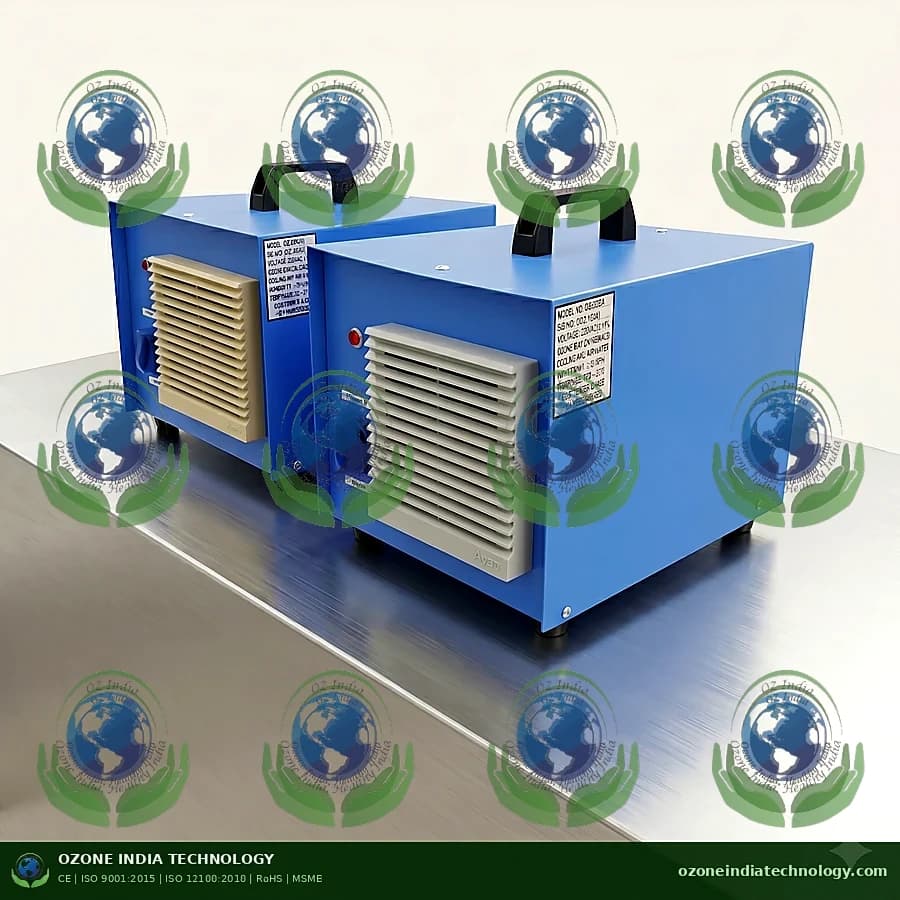
Ozone Car Purifier
Portable ozone purifier for car interior disinfection and odour elimination
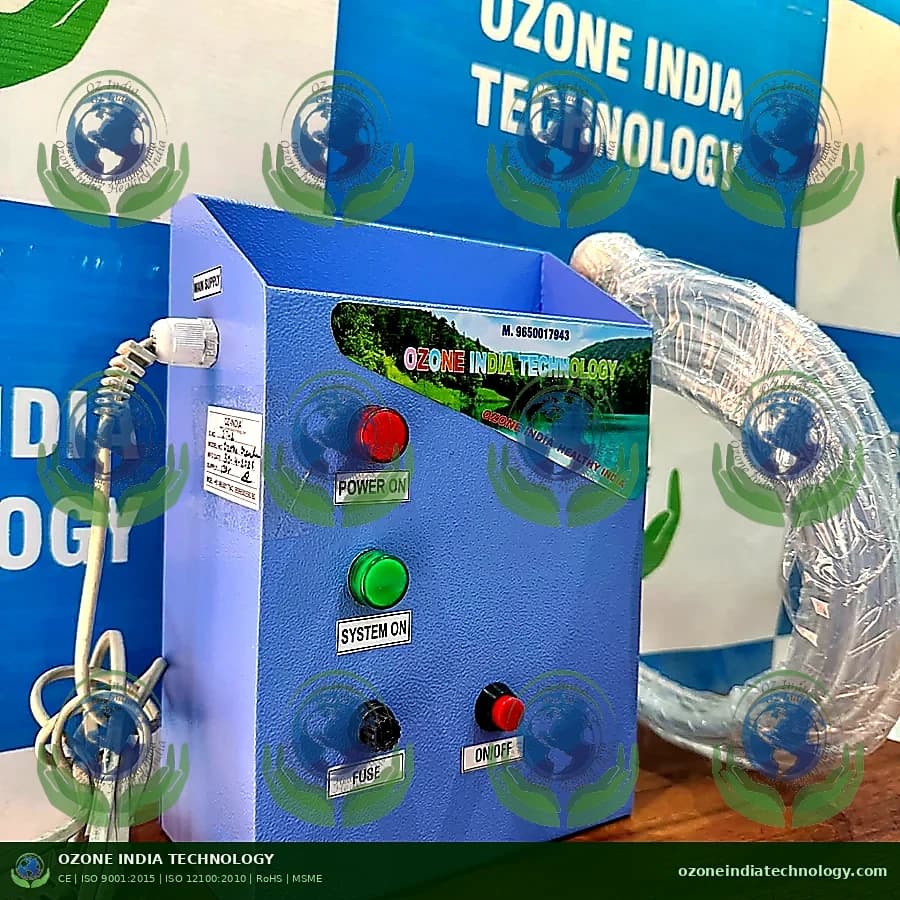
Ozone Generator — Portable 2g/hr
Compact corona discharge ozone generator for small-scale water treatment and air purification
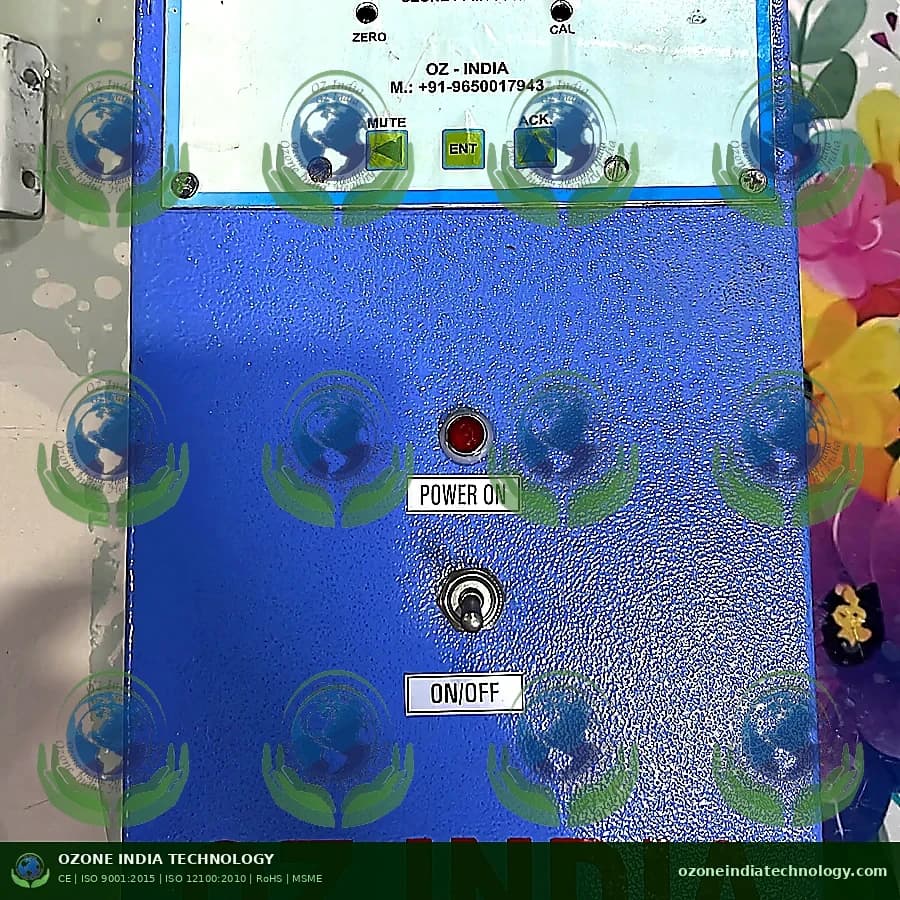
Ozone Ambient Air Monitor
Real-time ozone air monitoring with Delta PLC, HMI touchscreen & USB data logging
SIZING GUIDE
Installation & Sizing Guide
Sizing ozone for automotive detailing applications depends on vehicle cabin volume and target ozone concentration. Standard passenger car (sedan) cabin volume: 4–6 m³. SUV/MUV: 6–8 m³. Commercial van/MPV: 8–12 m³. For tobacco odour elimination (target 3–5 ppm, 2–3 hours): the OZ India ozone car purifier (5g/hr) achieves 3 ppm in a 5 m³ cabin within 30 minutes, and maintains 3–5 ppm throughout the 2-hour treatment cycle. For light odour (pet, food, mild tobacco): 1-hour treatment at 2–3 ppm with the car purifier on medium output. For mould/HVAC treatment: 30–60 minutes at 2–3 ppm with AC in recirculation mode.
Fleet ozone for automotive detailing throughput calculation: each ozone car purifier treats 1 vehicle per 2–3 hour cycle. In an 8-hour shift, one unit treats 2–4 vehicles. For a 50-vehicle/day target: 50 ÷ 3 vehicles/unit/shift = 17 units required for single-shift operation; 50 ÷ 6 vehicles/unit/2-shift = 9 units for 2-shift operation. OZ India recommends a 4–6 unit initial package for most fleet operators and 10–16 units for high-throughput car rental hubs. Each ozone car purifier unit: capital cost approximately ₹18,000–22,000; operating cost ₹12–15 per vehicle treatment (electricity only). Revenue per vehicle treatment for detailing shops: ₹500–2,000.
For OEM factory VOC treatment using industrial ozone for automotive detailing: sealed treatment bay volume = vehicle cabin volume (5 m³) + treatment bay headspace (typically 15–20 m³ for a standard sealed bay). Generator sizing for 5 ppm ozone in 20 m³ bay: 5 mg/m³ × 20 m³ = 100 mg/cycle; at 10g/hr production rate, achieving 100 mg requires 36 seconds — but maintaining 5 ppm against ozone decay and surface absorption requires continuous generation at 10g/hr for the 45–60 minute treatment period. OZ India's 10–25g/hr Industrial Ozone Generator is the standard specification for OEM factory cabin VOC treatment, with programmable concentration control and automatic off-gas venting through a catalytic destructor between treatment cycles.
Safety sizing for ozone car purifier treatments: all cabin ozone treatments must be conducted with the operator outside the vehicle. After treatment, ventilate for 30–60 minutes (windows open, AC on fresh air) before occupancy. OZ India's ozone car purifier includes a built-in timer that automatically shuts off generation after the programmed cycle time — preventing inadvertent over-treatment. For detailing shops treating 10+ vehicles/day with ozone for automotive detailing, OZ India recommends installing a fixed ozone ambient air monitor (OSHA limit 0.1 ppm TWA) in the treatment bay to protect staff from background ozone accumulation during continuous operations. The monitor provides a 4–20 mA output compatible with the workshop's safety alarm system.
CASE STUDY
Fleet Ozone Sanitisation Programme — Car Rental Operator, Bengaluru
A Bengaluru-based car rental company operating 180 vehicles (compact cars, SUVs, and luxury sedans) was experiencing persistent customer complaints about tobacco odour (affecting 15% of fleet) and post-monsoon mould odour (affecting 25% of fleet during October–December). Repeated shampooing and spray deodorant application by the in-house detailing team provided only 3–5 days of odour masking before complaints recurred, and customer ratings on the rental platform showed 'vehicle cleanliness' averaging 3.8/5 — below the company's 4.5/5 target. The operations manager estimated ₹3.2 lakh/year in re-cleaning labour and product costs.
OZ India Technology supplied 6 ozone car purifier units (5g/hr each) and conducted a full-day fleet detailing training programme for the 4-person in-house detailing team. A standard ozone for automotive detailing protocol was established: every returned vehicle receives a 2-hour ozone car purifier treatment before re-dispatch (tobacco-suspected vehicles: 3 hours); HVAC-focused treatment for monsoon mould using AC recirculation mode. Vehicle treatment records are logged digitally with QR-code-linked certificates displayed on the dashboard for the next customer.
Results at 6 months: vehicle cleanliness rating increased to 4.7/5 (24% improvement); tobacco and mould odour complaints reduced from 40% to 2% of vehicle returns; re-cleaning labour cost reduced by 80% (₹2.56 lakh/year saving); ozone for automotive detailing operating cost = 6 units × ₹13/vehicle × 180 vehicles/day = ₹14,040/month = ₹1.68 lakh/year. Net annual saving: ₹2.56 − ₹1.68 lakh = ₹88,000, plus unmeasured revenue benefit from improved customer ratings and increased repeat bookings attributed to vehicle freshness. Total ozone car purifier investment payback: 8 months.
FAQ
Frequently Asked Questions
How long does an ozone car purifier treatment take to eliminate tobacco odour?+
An OZ India ozone car purifier (5g/hr) eliminates moderate tobacco odour from a standard sedan in 2 hours at 3–5 ppm cabin concentration. Heavy, long-term tobacco odour (vehicles used by daily smokers over 1+ years) may require a 3-hour first treatment followed by a second 2-hour treatment 24 hours later. After treatment, ventilate the vehicle for 30–60 minutes before occupancy. The treatment is permanent — ozone chemically transforms nicotine and combustion byproduct molecules rather than masking odour. Customer satisfaction rate for OZ India ozone car purifier tobacco treatment: >95% at the prescribed protocol.
Is ozone car purifier treatment safe for vehicle interior surfaces?+
At the 3–5 ppm concentration and 2–3 hour exposure used for ozone for automotive detailing, ozone does not damage standard automotive interior materials — fabrics, synthetic leather (PU, PVC), hard plastics, glass, and metal. Natural rubber seals exposed to ozone may experience accelerated degradation over many repeated high-concentration treatments; OZ India recommends limiting continuous ozone car purifier treatment of any single vehicle to once monthly. ASTM D1149 defines ozone resistance testing for rubber — automotive-grade EPDM rubber seals used in Indian passenger cars are rated for 50+ ppm·hour without visible cracking, far above the 6–15 ppm·hour of a typical ozone car purifier treatment cycle.
Can ozone for automotive detailing sanitise against COVID-19 and viruses?+
Yes. Ozone at 3–5 ppm achieves 99.9% inactivation of enveloped viruses including SARS-CoV-2, influenza, and adenovirus on vehicle interior surfaces within 30 minutes of exposure. The CDC and WHO have documented ozone's virucidal efficacy as a high-level disinfectant. Ola Cabs' 2022 fleet hygiene protocol includes ozone for automotive detailing as an approved sanitisation method. OZ India provides treatment certificates (vehicle number, ozone concentration, duration, date, operator) for fleet operators documenting sanitisation protocols — suitable for corporate fleet hygiene compliance records.
How does ozone car purifier treat vehicle HVAC mould?+
Place the ozone car purifier in the passenger footwell. Close all windows and doors. Set AC to maximum fan speed, fresh-air mode for 5 minutes to clear ducts. Switch to recirculation mode and run the ozone car purifier for 45–60 minutes at medium-high output. Ozone circulates through the blower, evaporator, and all duct branches, destroying Aspergillus, Cladosporium, and bacterial colonies on moist surfaces. After treatment, run AC on fresh-air mode with windows open for 30 minutes before occupancy. For severe monsoon mould, repeat treatment 48 hours later. EPA (2000) HVAC duct cleaning guidance confirms ozone as effective for biological growth in enclosed ductwork at 1–3 ppm.
What is the difference between ozone car purifier and UV-C vehicle sanitisers?+
Ozone for automotive detailing reaches all surfaces — including underseat areas, duct interiors, boot liners, and hidden crevices — through gas-phase penetration. UV-C wand sanitisers require line-of-sight exposure: surfaces shielded by seat structure, under floor mats, or inside HVAC ducts receive no UV treatment. Ozone is approximately 3,000 times more effective than UV-C for odour elimination, as UV-C does not break down odour-causing molecules — it only inactivates surface microbes. For complete vehicle sanitisation including odour elimination, VOC reduction, and HVAC treatment, ozone car purifier is the superior technology. UV-C wands are faster for spot surface sanitisation of high-touch points (steering wheel, door handles) between rides.
How many vehicles per day can one ozone car purifier treat?+
One OZ India ozone car purifier (5g/hr) treats 2–3 vehicles per 8-hour shift at standard 2-hour treatment cycles. For higher throughput — fleet operators targeting 20–50 vehicles/day — OZ India supplies multi-unit packages (4–6 units) with shared timer control, allowing simultaneous treatment of multiple vehicles. 6 units operating in 2-hour cycles over an 8-hour shift = 24 vehicle treatments/shift. For 10–15 minute express sanitisation cycles (post-ride sanitisation in mobility fleets), 1 unit treats 32–48 vehicles per shift — sufficient for high-frequency fleet turnover operations.
What new car VOC reduction does ozone for automotive detailing achieve?+
Ozone for automotive detailing at OEM factory specification (5–10 ppm, 45–60 minutes in sealed cabin) reduces formaldehyde by 60–80% and BTEX compounds (benzene, toluene, ethylbenzene, xylene) by 50–70% from new vehicle cabin air. This brings new vehicle cabin air quality from typical 200–500 μg/m³ formaldehyde to below 100 μg/m³ (meeting China GB/T 27630) and below 50 μg/m³ (meeting WHO 2010 formaldehyde guideline). OZ India supplies 10–25g/hr ozone generators for OEM cabin VOC treatment to automotive manufacturers at Indian plants, and 5g/hr portable ozone car purifier units to dealerships as a delivery preparation service.
RELATED
Related Applications
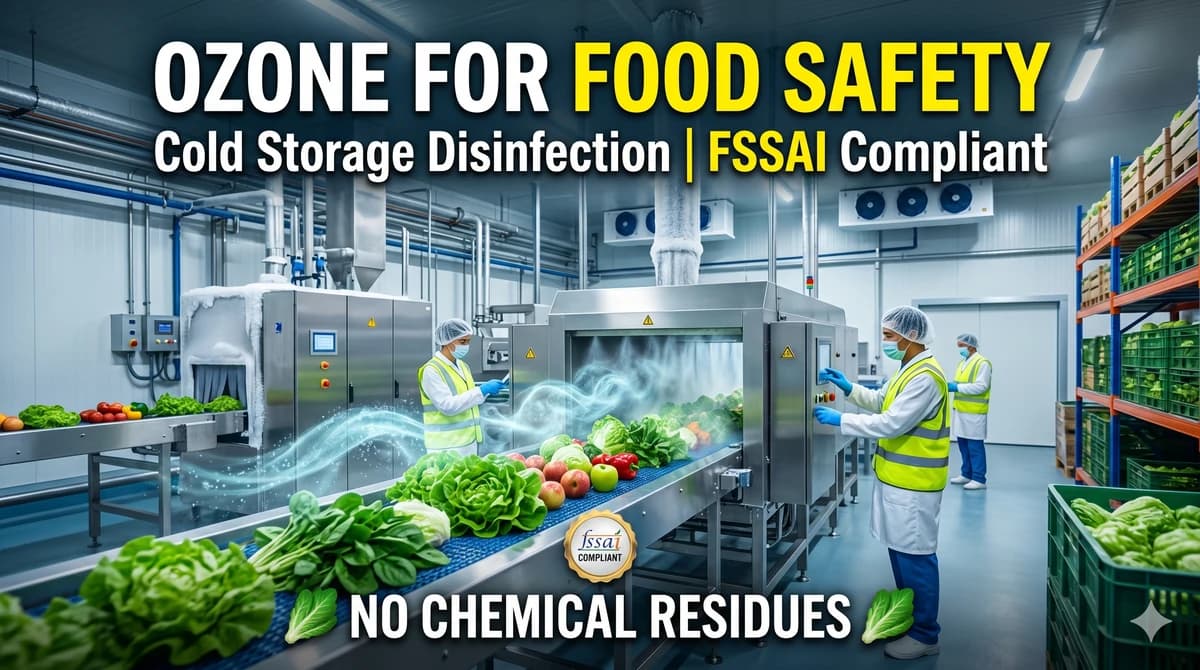
Food Processing and Safety
FSSAI-compliant ozone disinfection for food contact surfaces, CIP, cold storage, and vegetable washing
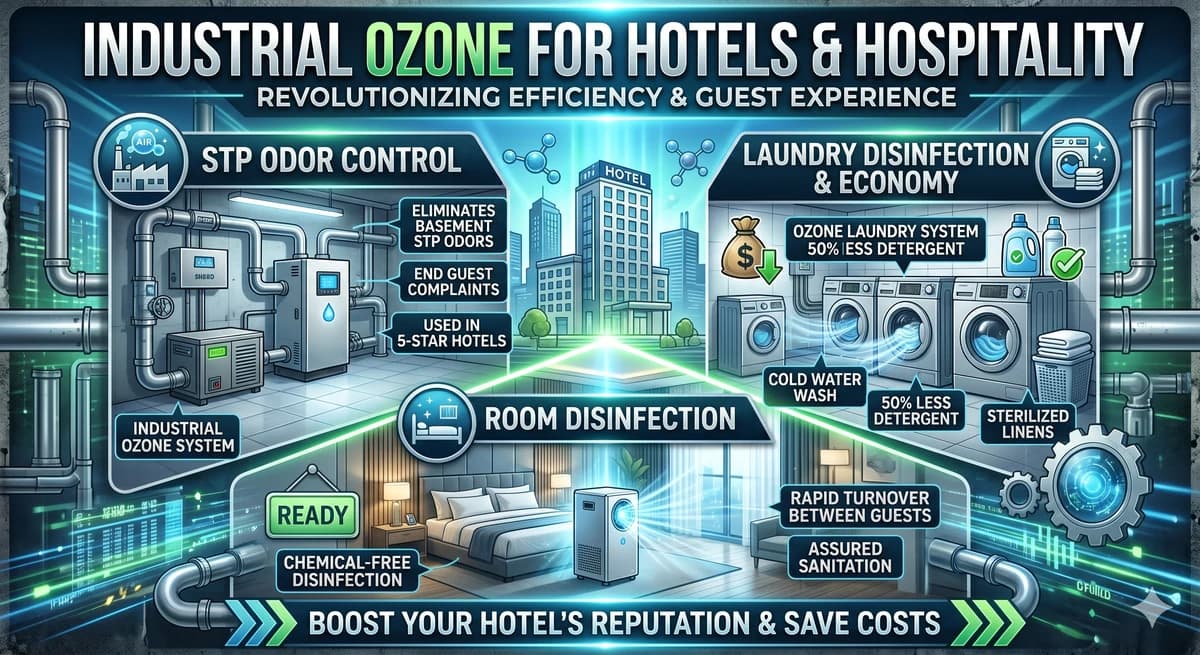
Hotel and Hospitality
Comprehensive ozone and UV solutions for hotel laundry, pool, kitchen, and indoor air quality
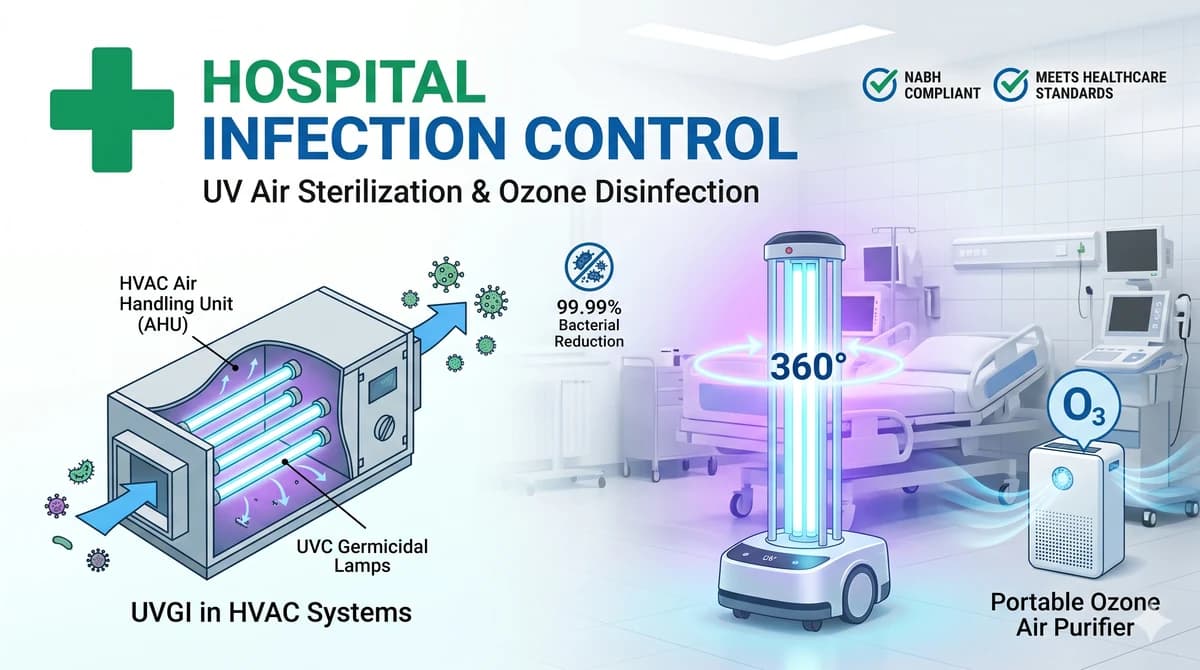
Hospital and Healthcare
NABH-aligned UV and ozone disinfection for hospital air, water, surfaces, and instrument sterilization